How to Lace Shoes So They Dont Have to Be Tied Jordans
If you wear Jordans or any sneaker regularly, tying laces every time can feel repetitive and unnecessary. Many sneaker lovers prefer a clean, slip-on look while still keeping their shoes secure and stylish.
The good news? You can absolutely lace your shoes—especially Jordans—so they don’t need constant tying.
This guide explains How to Lace Shoes So They Dont Have to Be Tied Jordans, using practical sneaker-lacing techniques, styling principles, and comfort-focused adjustments used in sneaker culture.
Why People Want Tie-Free Lacing for Jordans:
Sneakers like Air Jordans are designed for performance and style, but modern wearers often prefer convenience.
Common reasons include:
- Faster wear and removal
- Cleaner “no bow” aesthetic
- Streetwear fashion styling
- Reduced lace clutter
- Comfort and lockdown without knots
Jordan sneakers (especially models like Jordan 1s, 4s, and 11s) are ideal for lace customization because of their structured eyelets and durable design.
What “No-Tie Lacing” Really Means:
Before starting, it’s important to understand:
No-tie lacing does NOT mean loose shoes.
Instead, it means:
- Laces are secured inside the shoe
- Tension is adjusted for fit
- Excess lace is hidden or locked
You still get a firm fit—just without visible knots.
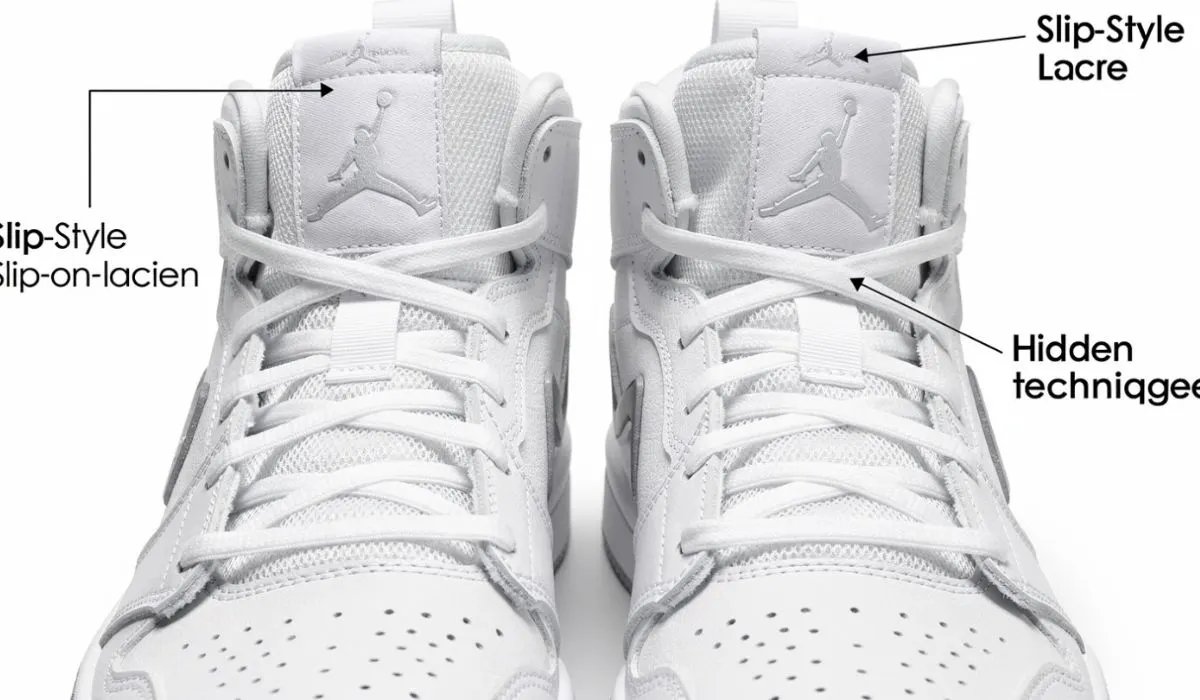
Step-by-Step Method 1: “Hidden Knot Lacing” (Best for Jordans):
This is the most popular sneakerhead technique.
Step 1: Lace Normally
Start lacing your Jordans using a standard crisscross pattern from bottom to top.
Step 2: Adjust Tightness Evenly
Make sure:
- Midfoot is snug
- Heel is locked in place
- No pressure points
Do not over-tighten.
Step 3: Stop at Second-Last Eyelet
Instead of going to the top, stop one eyelet below.
Step 4: Tie Inside the Shoe
Take both lace ends and:
- Tie a tight knot inside the tongue area
- Tuck the knot under the tongue
This hides the knot completely.
Step 5: Adjust Tongue Position
Ensure the tongue sits flat and covers the knot.
✔ Result: Clean look, secure fit, no visible tie.
Step-by-Step Method 2: “Lace Lock (Runner’s Style)”:
This method is inspired by athletic footwear systems.
Step 1: Lace Normally to the Top
Thread laces all the way through the top eyelets.
Step 2: Create a Loop
At each side, form a small loop with the lace.
Step 3: Cross and Lock
Cross the lace ends through the loops and pull tight.
Step 4: Tuck Inside Shoe
Instead of tying a bow:
- Tuck lace ends inside the shoe
- Adjust for comfort
✔ Result: Secure fit without visible knots.
Step-by-Step Method 3: “Bar Lacing (Clean Streetwear Look)”:
This is popular in sneaker fashion for Jordans.
Step 1: Start from Bottom Eyelets
Insert laces straight across.
Step 2: Create Horizontal Bars
Instead of crossing:
- Run laces straight across each row
- Go up evenly
Step 3: Keep Tension Balanced
Do not over-tighten—keep consistent spacing.
Step 4: Hide Lace Ends
At the top:
- Tuck laces inside shoe
- Or knot inside tongue
✔ Result: Flat, aesthetic streetwear look with no bows.
Step-by-Step Method 4: Elastic No-Tie Conversion:
This method turns Jordans into slip-on sneakers.
Step 1: Replace Laces with Elastic Laces
Use elastic or stretch laces designed for sneakers.
Step 2: Lace Normally
Thread elastic laces like regular ones.
Step 3: Set Comfortable Tension
Adjust so shoe feels snug but flexible.
Step 4: Lock Ends
Use lace clips or hidden knots inside shoe.
✔ Result: Slip-on comfort with secure fit.
Step-by-Step Method 5: “Sneaker Hide Technique”:
Simple and beginner-friendly.
Step 1: Lace Normally
Go up to the top eyelets.
Step 2: Tie a Tight Knot
Tie a small knot at the end.
Step 3: Tuck Into Shoe Collar
Hide knot under:
- Tongue
- Collar lining
✔ Result: Fast, minimal, and effective.
Best Jordan Models for No-Tie Lacing:
Certain Jordan sneakers work especially well:
- Air Jordan 1 (high-top structure ideal for hidden knots)
- Air Jordan 4 (supportive eyelets)
- Air Jordan 11 (sleek lacing system)
- Air Jordan 3 (balanced fit for bar lacing styles)
These models hold tension well without needing visible bows.
Expert Sneaker Styling Principles:
Sneaker customization is widely influenced by sneaker culture and performance design principles. According to footwear design standards used in athletic shoes and supported by sportswear engineering, proper lacing should:
- Stabilize heel movement
- Reduce pressure on midfoot
- Maintain foot alignment during walking
- Prevent lace loosening over time
Brands like Nike, which produces Air Jordans, design eyelets specifically to support customizable lacing tension while maintaining foot stability.
Effective Tips for Perfect No-Tie Lacing:
- Always test tightness while standing
- Walk around before final adjustment
- Keep lace ends evenly balanced
- Use waxed laces for better grip
- Avoid over-tightening near toe box
- Double knot inside shoe for security
Common Mistakes to Avoid:
- Making shoes too loose (causes heel slip)
- Over-tightening midfoot (causes discomfort)
- Uneven lace tension
- Poor knot placement that creates pressure points
- Not testing walking comfort
Read Next: Leather vs Synthetic Shoes | Which Is Better
Benefits of No-Tie Lacing for Jordans:
- Faster wear and removal
- Cleaner sneaker appearance
- Reduced lace wear and tear
- Improved streetwear styling
- Comfortable daily use
- Less risk of tripping on loose laces
Maintenance Tips:
- Check lace tension weekly
- Replace worn laces regularly
- Clean lace eyelets to prevent friction
- Re-adjust after long wear sessions
FAQs:
1. Can I lace Jordans so I never have to tie them again?
Yes. Using loose bar lacing, hidden-knot lacing, or elastic no-tie laces lets you slip them on without retying.
2. What lacing style works best for slip-on comfort?
Loose bar lacing and straight (fashion) lacing keep the top relaxed while holding the midfoot snug.
3. Do I need special laces to make Jordans no-tie?
Not required, but elastic no-tie laces make it easier and more comfortable for daily wear.
4. Will no-tie lacing make my Jordans loose?
If you secure the bottom eyelets snugly and loosen only the top rows, the fit stays stable.
5. How do I hide the lace knot for a clean look?
Tie a small knot at the ends and tuck it under the tongue or inside the shoe.
6. Is this method safe for walking long distances?
Yes, as long as the midfoot is snug. Avoid overly loose lacing if you’ll walk a lot.
7. Can I use this lacing style on all Jordan models?
Most models like lows, mids, and highs work well with no-tie lacing styles.
8. Will this damage the eyelets or shape of the shoe?
No. Gentle lacing without over-tightening preserves the eyelets and upper.
9. How do I adjust tightness after setting no-tie laces?
Pull slack from the top rows or retighten the bottom rows slightly for a better fit.
10. Does no-tie lacing change the look of Jordans?
It often gives a cleaner, streetwear look with straighter lace lines and no visible bow.
11. Are no-tie laces good for kids wearing Jordans?
Yes. They’re convenient and reduce tripping from untied bows.
12. Can I switch back to regular lacing later?
Absolutely. Just relace normally if you want the traditional tied style again.