How Shoes Are Made From Recycled Plastic | From Bottles to Footwear
Every year, millions of tons of plastic waste end up in oceans, rivers, and landfills. At the same time, the footwear industry produces billions of shoes—many of which are made using synthetic materials derived from petroleum. To solve both problems at once, brands have started turning plastic waste into shoes.
Today, shoes made from recycled plastic are becoming more popular as part of the global shift toward sustainability. Major companies like Adidas, Nike, and Allbirds are leading this movement by transforming discarded plastic into high-performance footwear.
But how exactly are shoes made from recycled plastic? And are they actually good quality?
In this detailed guide, we’ll explore How Shoes Are Made From Recycled Plastic—from plastic waste collection to finished sneakers—along with benefits, challenges, and the future of eco-friendly shoes.
Why Recycled Plastic Shoes Were Created:
The idea behind recycled plastic shoes comes from two major global problems:
1. Plastic Pollution
Plastic takes hundreds of years to decompose. It breaks into microplastics that pollute oceans and harm wildlife.
2. High Footwear Waste
Traditional shoes are difficult to recycle because they contain mixed materials like foam, rubber, glue, and fabric.
By combining these two problems, companies found a solution:
➡ Turn plastic waste into wearable shoes.
What Types of Plastic Are Used?
Not all plastic can be used for shoes. Most recycled footwear uses:
- PET plastic bottles (most common)
- Industrial plastic waste
- Ocean plastic waste
- Recycled polyester fibers
PET (polyethylene terephthalate) is especially popular because it is strong, lightweight, and easy to convert into fiber.
Read Next: Is It Disrespectful To Wear Shoes In The House? Cultural Etiquette Explained
How Shoes Are Made From Recycled Plastic:
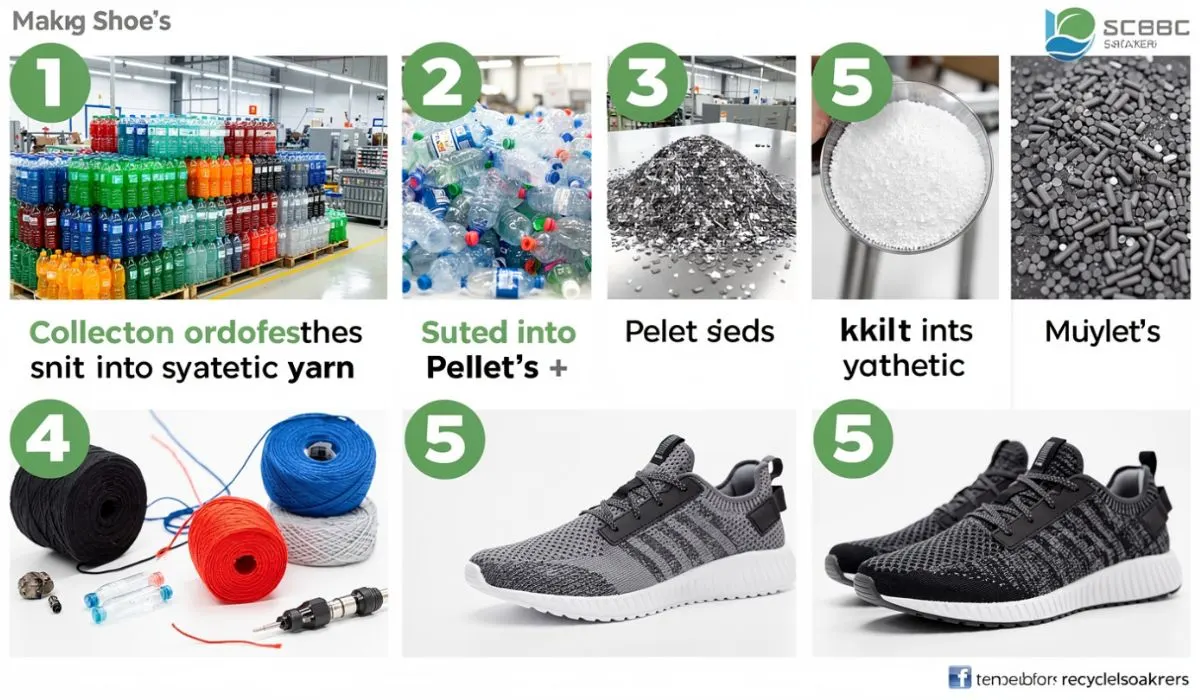
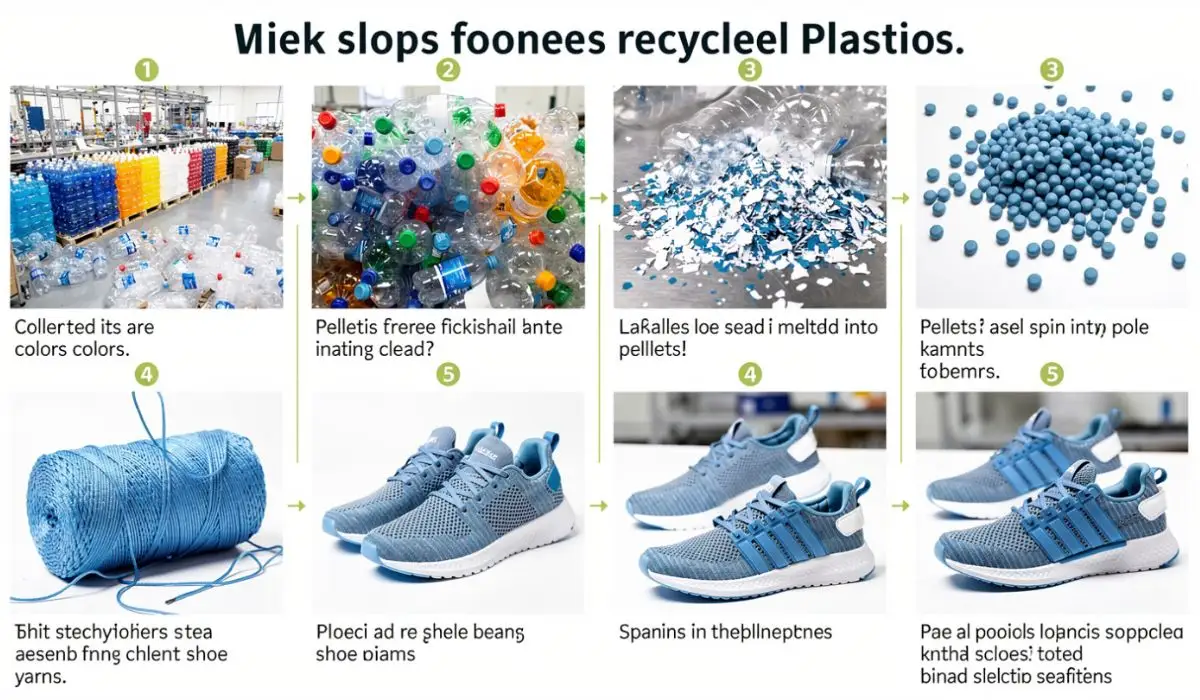
Step 1: Collecting Plastic Waste
The process starts with collecting plastic from different sources:
- Ocean cleanup programs
- Recycling centers
- Community collection drives
- Waste sorting facilities
For example, ocean-cleaning initiatives gather plastic waste floating in the sea before it breaks down into microplastics.
This raw material is then transported to recycling plants.
Step 2: Cleaning and Sorting Plastic
Once collected, plastic waste is:
- Sorted by type and color
- Washed thoroughly
- Cleaned of dirt, labels, and contaminants
This step is crucial because even small impurities can affect the final quality of the shoe material.
Step 3: Shredding Into Flakes
After cleaning, plastic bottles and waste are:
- Shredded into small flakes
- Processed into uniform pieces
- Prepared for melting
These flakes are the base material for recycled fibers.
Step 4: Melting and Turning Into Pellets
The plastic flakes are then:
- Melted at high temperatures
- Filtered to remove impurities
- Converted into small pellets
These pellets are the raw material used for fiber production.
Step 5: Spinning Plastic Into Yarn
This is where plastic becomes fabric.
The pellets are:
- Melted again
- Spun into thin polyester fibers
- Stretched and twisted into yarn
This yarn is what gives shoes their fabric upper.
Brands like Adidas use this step to create their famous recycled ocean plastic shoes.
Step 6: Weaving the Shoe Upper
The plastic yarn is then:
- Woven or knitted into fabric
- Shaped into breathable mesh material
- Designed for flexibility and comfort
Modern machines allow precise control, making the fabric:
- Lightweight
- Stretchable
- Durable
This upper material is similar in appearance to traditional sneaker fabric but made entirely from recycled plastic.
Step 7: Creating the Sole
The sole is usually made from a mix of materials, including:
- Recycled rubber
- Foam made from recycled plastics
- EVA (ethylene vinyl acetate)
Some brands also use bio-based foam instead of petroleum-based materials.
The sole is designed to provide:
- Cushioning
- Shock absorption
- Grip and stability
Step 8: Assembly of the Shoe
Once all parts are ready, the shoe is assembled:
- Upper is attached to the sole
- Laces and insoles are added
- Glue or heat bonding is used
- Final stitching is completed
Modern shoe production uses both automated machines and manual craftsmanship.
Step 9: Quality Testing
Before being sold, recycled plastic shoes undergo testing:
- Durability tests
- Flexibility checks
- Water resistance tests
- Comfort evaluation
This ensures they perform like traditional shoes.
Benefits of Shoes Made From Recycled Plastic:
1. Reduces Ocean Pollution
Each pair of shoes can reuse multiple plastic bottles, helping reduce waste in oceans and landfills.
2. Eco-Friendly Production
Recycled materials reduce the need for new petroleum-based plastics.
3. Lightweight Design
Recycled polyester is often lighter than traditional materials.
4. Breathable Fabric
Mesh made from recycled plastic allows airflow, keeping feet cool.
5. Supports Sustainability Goals
Many companies are committed to reducing carbon emissions and environmental impact.
For example, Nike has introduced sustainability programs using recycled materials in their footwear lines.
Are Recycled Plastic Shoes Durable?
Yes—modern recycled plastic shoes are surprisingly durable.
They are:
- Strong enough for daily wear
- Resistant to wear and tear
- Suitable for sports and walking
However, durability depends on brand quality and design.
Are They Comfortable?
Yes, most recycled plastic shoes are designed for comfort:
- Soft knitted uppers
- Cushioned soles
- Flexible fit
Brands like Allbirds are known for creating extremely comfortable eco-friendly shoes using recycled materials.
Challenges of Recycled Plastic Shoes:
Despite their benefits, there are some challenges:
1. Cost
Eco-friendly shoes can be more expensive due to complex recycling processes.
2. Limited Recycling of Old Shoes
Even recycled shoes are difficult to recycle again due to mixed materials.
3. Performance Limitations
High-performance athletes may still prefer specialized synthetic or engineered shoes.
4. Production Complexity
Collecting and processing ocean plastic is expensive and time-consuming.
Environmental Impact:
Recycled plastic shoes help reduce:
- Ocean waste
- Landfill pollution
- Carbon emissions
However, they are not a perfect solution. The goal is to move toward a circular economy, where materials are reused continuously.
Popular Brands Using Recycled Plastic:
Several global companies are leading innovation:
Adidas
- Uses ocean plastic in sneaker uppers
- Partners with environmental organizations
Nike
- Incorporates recycled polyester in shoes
- Focuses on sustainability innovation
Allbirds
- Known for eco-friendly materials
- Uses recycled plastics and natural fibers
Future of Recycled Plastic Shoes:
The future looks promising:
- More efficient recycling systems
- Fully recyclable shoes
- Reduced carbon footprint production
- Biodegradable alternatives
Scientists and designers are working toward shoes that can be completely reused or safely returned to nature.
Last Call:
Shoes made from recycled plastic are an important innovation in sustainable fashion. They transform waste into useful products and help reduce environmental pollution.
The process—from collecting plastic waste to spinning it into yarn and assembling shoes—is complex but highly effective.
While not perfect, recycled plastic shoes represent a major step toward a cleaner, more responsible footwear industry. With companies like Adidas, Nike, and Allbirds leading the way, the future of footwear is becoming more sustainable, innovative, and environmentally conscious.