Do You Need To Break In Running Shoes | Comfortably, And Without Causing Foot Pain
Buying a new pair of running shoes can feel great, but many runners wonder whether they should break them in before heading out for a long run. The good news is that you usually do not need a long break-in period for modern running shoes. Most quality running shoes are designed to feel comfortable almost immediately.
However, that does not mean you should take a brand-new pair straight into a marathon or long-distance training session. Your feet, the upper material, cushioning, and your running style may all need a little time to adjust.
Understanding how to break in running shoes properly can help reduce discomfort, hot spots, blisters, and unexpected foot pain while allowing you to determine whether the shoes are genuinely suitable for your feet.
Do You Need to Break In Running Shoes?

In most cases, running shoes do not require a traditional break-in period like leather boots or stiff dress shoes.
Modern running shoes commonly use flexible mesh, engineered uppers, foam midsoles, and lightweight materials that are designed to provide comfort from the first wear.
That said, a short adjustment period can still be useful.
Why a Short Break-In Period Helps
Even when the shoe itself feels comfortable, your body may need time to adapt to its:
- Cushioning level
- Heel-to-toe drop
- Arch support
- Flexibility
- Weight
- Heel structure
- Toe-box shape
- Overall geometry
Fact: A shoe can feel comfortable during a five-minute fitting but behave differently after several miles because swelling, friction, and repeated foot movement become more noticeable during longer runs.
How Long Does It Take to Break In Running Shoes?
There is no universal number of miles required to break in running shoes. Many runners can use a new pair immediately, while others prefer several short sessions before using them for longer distances.
A practical approach is to gradually increase the amount of time you spend wearing them.
A Simple Running Shoe Break-In Schedule
You can use this progression:
- First session: Walk around for 20–30 minutes.
- Second session: Take a short 15–20 minute easy run.
- Third session: Run for approximately 20–30 minutes at an easy pace.
- Fourth session: Try a normal training run if the shoes still feel comfortable.
- Afterward: Gradually introduce longer runs.
The goal is not necessarily to soften the shoe. Instead, the goal is to make sure your feet and the shoes work well together.
Should You Wear New Running Shoes Around the House?

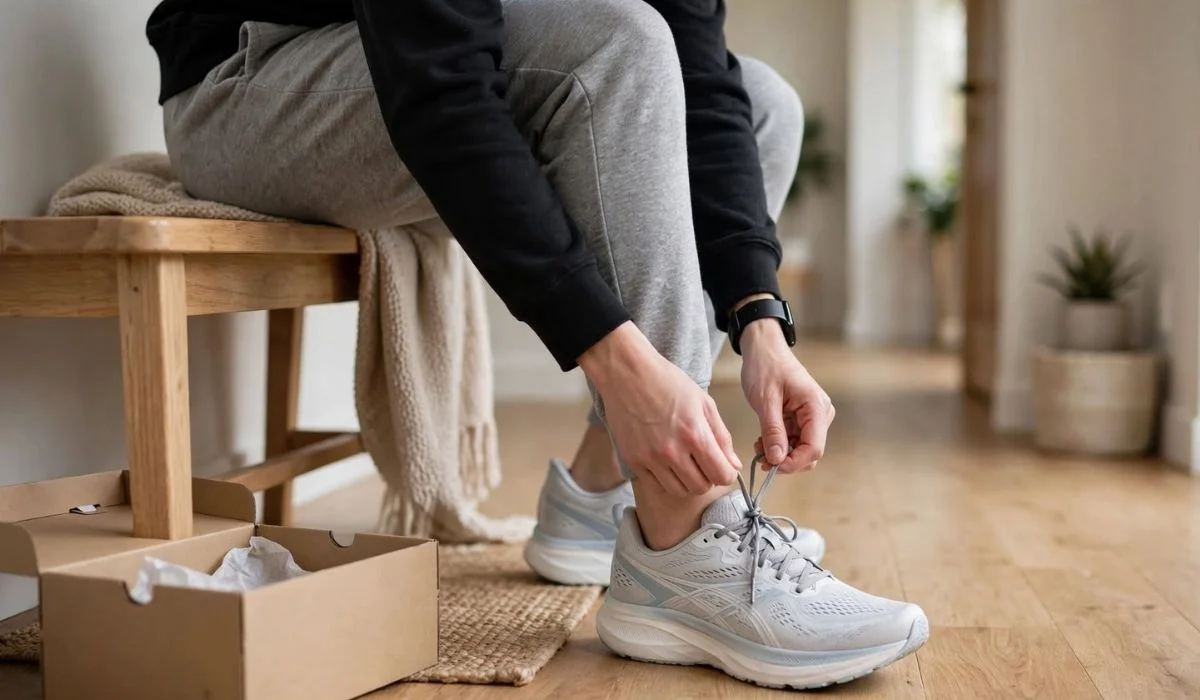
Yes. Wearing your new running shoes around the house is an easy way to check their initial comfort before taking them outside.
What to Look For
Walk around on a clean surface and pay attention to:
- Heel movement
- Toe pressure
- Tight areas across the forefoot
- Arch discomfort
- Ankle rubbing
- Seam irritation
- Overall stability
- Whether your toes can move naturally
This is particularly useful if the retailer allows returns after indoor wear.
Fact: Your feet can change slightly in volume throughout the day, so trying new running shoes later in the day can sometimes provide a more realistic fit than trying them only first thing in the morning.
Do Running Shoes Get More Comfortable After Wearing Them?
Sometimes, yes—but the change is usually subtle.
The upper material may become more flexible, and the shoe may feel more natural as your feet become accustomed to its shape.
However, a properly fitting running shoe should not require pain or weeks of uncomfortable running before it feels acceptable.
What Normal Adjustment Feels Like
A normal adjustment may include:
- The upper becoming more flexible
- The shoe feeling less unfamiliar
- Slight changes in how the cushioning feels
- Your feet becoming accustomed to the shoe’s geometry
- The lacing becoming easier to fine-tune
What Is Not Normal
Stop using the shoes for running if you consistently experience:
- Sharp pain
- Numbness
- Tingling
- Significant heel rubbing
- Repeated blisters
- Toe pressure
- Pain that worsens during the run
Fact: Discomfort caused by an unsuitable fit generally does not disappear simply because you wear the shoe more often.
Read Next: Are Running Shoes Good For Walking On Treadmill | Comfortable Treadmill Walking
Do Running Shoe Midsoles Need to Be Broken In?
The midsole is the part of the shoe that provides much of its cushioning and impact protection.
Different foams behave differently, but modern running-shoe foams are generally designed to perform from the beginning.
What Happens to the Cushioning?
A new shoe may feel:
- Firmer than expected
- Softer than your previous pair
- More responsive
- Less flexible
- Slightly unfamiliar
Some shoes may feel different after several runs as the materials settle and your body adapts.
However, you should not expect a dramatically different shoe after a certain number of miles.
Fact: Foam characteristics vary considerably between running shoe models, so there is no reliable universal mileage at which every midsole becomes “broken in.”
Do You Need to Break In Running Shoes Before a Marathon?
Yes, you should test new running shoes before race day, even if the shoes technically do not need breaking in.
This is one of the most important rules for marathon preparation.
Why Race-Day Testing Matters
A shoe that feels excellent for a short walk may create problems after several hours of running.
Testing helps you identify:
- Blister-prone areas
- Heel slipping
- Toe pressure
- Sock compatibility
- Lace pressure
- Foot swelling issues
- Cushioning preferences
- Long-distance comfort
You should ideally complete at least some meaningful training in the shoes before relying on them for a marathon.
Fact: Marathon-distance running dramatically increases the amount of repetitive foot movement compared with a short test run, making small fit problems much more noticeable.
Can You Run in Brand-New Running Shoes?
Yes, provided they fit properly and feel comfortable.
There is no rule saying that running shoes must be worn for a specific number of miles before they can be used.
When Running Immediately Is Reasonable
A new pair may be suitable for an immediate run if:
- The fit feels secure
- Your toes have enough room
- The heel does not slide excessively
- There are no pressure points
- The upper does not rub
- You have tested the shoes sufficiently
- The shoe design feels natural to you
For a first run, keeping the distance relatively short is still a smart precaution.
Why You Should Not Take New Shoes on a Very Long Run
The biggest problem with new running shoes is uncertainty.
You may discover a fit issue only after several miles.
Problems That Can Appear During a Long Run
A new pair may cause:
- Blisters
- Hot spots
- Toenail pressure
- Heel irritation
- Arch discomfort
- Foot fatigue
- Calf tightness
- Changes in running mechanics
A long run also gives you fewer opportunities to stop and change footwear.
Fact: Friction becomes increasingly important as running duration increases because the same area of skin experiences repeated contact with the shoe and sock.
How to Break In Running Shoes Properly
Instead of trying to deliberately wear down the shoe, use a gradual testing strategy.
Step 1: Check the Fit
Before running, make sure:
- Your heel sits securely.
- Your toes can move.
- Your forefoot is not compressed.
- The upper does not create painful pressure.
- The shoe feels stable.
Your feet should not feel squeezed simply because the shoe is new.
Step 2: Walk First
Wear the shoes for everyday walking or a short indoor session.
This gives you an opportunity to notice rubbing and pressure before adding running impact.
Step 3: Run Short
Your first running session should be easy and relatively short.
Avoid combining brand-new shoes with:
- Speed intervals
- Hill repeats
- Long runs
- Races
- Hard tempo workouts
An easy run makes it easier to identify problems without adding unnecessary intensity.
Step 4: Inspect Your Feet
After the run, check for:
- Red areas
- Hot spots
- Blisters
- Pressure marks
- Soreness
- Toenail discomfort
A small irritated area can become a much bigger problem during a longer run.
Step 5: Increase Distance Gradually
If everything feels good, gradually use the shoes for longer training sessions.
You do not need to follow a rigid mileage formula. Comfort and fit should guide the progression.
How to Tell If Your New Running Shoes Fit Correctly
Breaking in a shoe cannot fix an incorrect size.
Signs the Shoe Is Too Small
Look for:
- Toes touching the front
- Toenail pressure
- Numbness
- Forefoot squeezing
- Pain when running downhill
- Pressure across the top of the foot
Signs the Shoe Is Too Large
Possible signs include:
- Excessive heel movement
- Foot sliding forward
- Repeated blisters
- Difficulty keeping the foot secure
- Feeling unstable
Signs the Shoe Is Too Narrow
You may notice:
- Side pressure on the forefoot
- Little-toe discomfort
- Pressure across the widest part of the foot
- Numbness during longer runs
Fact: Running shoes generally need enough room for natural toe movement because feet can expand during prolonged exercise.
What About Heel Slipping in New Running Shoes?
A small amount of movement may occur, but significant heel slipping is a warning sign.
Try adjusting the laces before deciding that the shoes are unsuitable.
Try the Runner’s Knot
A runner’s knot, also called a heel-lock lacing technique, can help secure the heel without excessively tightening the entire shoe.
It can be particularly useful when:
- Your heel moves inside the shoe
- You have a narrower heel
- You experience heel rubbing
- The shoe otherwise fits well
If the heel continues to slide despite proper lacing, the shoe’s shape may simply not match your foot.
Should You Break In Running Shoes With Walking?
Walking is one of the easiest ways to introduce yourself to a new pair.
It produces less impact than running while still allowing you to evaluate comfort.
Benefits of Walking in New Running Shoes
Walking can help you identify:
- Pressure points
- Heel movement
- Toe restriction
- Upper stiffness
- Lace discomfort
- General fit problems
However, walking cannot completely replace running in the shoes.
A shoe may feel excellent while walking but behave differently once your stride, impact, and foot movement change during running.
Can You Break In Running Shoes on a Treadmill?
Yes. A treadmill can be a convenient place to test new running shoes.
Why a Treadmill Is Useful
A treadmill allows you to:
- Keep the pace controlled
- Stop quickly if discomfort develops
- Test different speeds
- Observe how the shoe feels during continuous running
- Avoid unpredictable outdoor terrain
Start with an easy session rather than immediately testing the shoes during a hard workout.
Should Trail Running Shoes Be Broken In Differently?
Trail running shoes may require additional testing because their construction can differ from road-running shoes.
They may have:
- More aggressive tread
- Protective toe caps
- Firmer midsoles
- More structured uppers
- Different levels of flexibility
Testing Trail Shoes
Before a long trail run, try them on:
- Short walks
- Easy trail sessions
- Uneven terrain
- Gentle inclines
- Descents
The goal is to make sure the shoe remains comfortable and secure when the terrain becomes less predictable.
Do Different Running Shoe Materials Need Different Break-In Times?
Yes, materials can influence how a shoe initially feels.
Mesh and Engineered Knit Uppers
These materials are commonly flexible and breathable.
They often feel relatively comfortable from the beginning, although the fit may still require adjustment.
Synthetic Overlays
Overlays can provide structure around areas such as the heel or midfoot.
A heavily structured area may feel more noticeable until you become accustomed to it.
Foam Midsoles
Foam is responsible for much of the shoe’s cushioning and responsiveness.
Different formulations can produce very different sensations, from soft and cushioned to firm and responsive.
What Socks Should You Wear When Breaking In Running Shoes?
Use the socks you normally plan to wear for running.
Changing socks can change the amount of friction and available space inside the shoe.
Good Running Sock Characteristics
Consider socks that provide:
- A comfortable fit
- Moisture management
- Minimal bunching
- Appropriate thickness
- Smooth construction around high-friction areas
Do not test new shoes with thick casual socks if you normally run in thin performance socks.
Fact: Sock thickness can noticeably change the internal fit of a running shoe, particularly in the toe box and forefoot.
Should You Use Insoles When Breaking In New Running Shoes?
If you normally use running insoles, test the new shoes with those same insoles.
Adding a different insole can change:
- Foot positioning
- Internal volume
- Arch contact
- Heel fit
- Cushioning
- Stability
Avoid Changing Too Many Things at Once
If possible, keep your normal:
- Socks
- Insoles
- Lacing method
- Running surface
- Training intensity
This makes it easier to identify whether the shoe itself works for you.
Common Mistakes When Breaking In Running Shoes
Many problems happen because runners focus too much on the idea of “breaking in” and not enough on fit.
Wearing Them for a Marathon Immediately
Even if the shoes feel comfortable, you have not tested their long-distance behavior.
Ignoring Hot Spots
A hot spot is often an early warning that friction is developing.
Do not assume it will disappear automatically.
Buying the Same Size Without Checking the Fit
Different models from the same brand can fit differently.
A familiar size does not guarantee an identical fit.
Tightening the Laces Too Much
Over-tightening can create pressure across the top of your foot and reduce comfort.
Assuming Pain Is Normal
A little unfamiliarity can be normal. Persistent pain is not something you should simply run through because the shoes are new.
How to Know When Your Running Shoes Are Ready for Long Runs
Your shoes are ready for longer sessions when they consistently feel comfortable and secure.
Look for:
- No recurring hot spots
- No significant heel slipping
- Comfortable toe movement
- No painful pressure points
- Stable foot placement
- Comfortable cushioning
- No unusual soreness after running
If a shoe continues to cause problems during short runs, increasing the distance is unlikely to solve the underlying issue.
New Running Shoes vs Old Running Shoes
Sometimes a new shoe feels strange simply because your old pair has become familiar.
| Feature | New Running Shoes | Familiar Running Shoes |
|---|---|---|
| Feel | Unfamiliar | Familiar |
| Upper | May feel structured | Usually already adapted |
| Cushioning | Fresh | More familiar sensation |
| Fit perception | Needs evaluation | Already understood |
| Long-run confidence | Needs testing | Usually established |
| Risk of discovering fit issues | Higher | Lower |
The goal is not to make new shoes feel exactly like your old pair. A new model may intentionally have different cushioning, support, or geometry.
When Should You Stop Trying to Break In a Running Shoe?
There is a point where “breaking in” becomes an excuse for a poor fit.
Consider returning or replacing the shoes if you repeatedly experience:
- Significant pain
- Numbness
- Persistent blisters
- Severe heel movement
- Toe compression
- Arch pain
- Unusual joint discomfort
- Increasing soreness after every run
A properly selected running shoe should support your training rather than require you to tolerate ongoing discomfort.
Final Takeaway: Do You Need to Break In Running Shoes?
So, do you need to break in running shoes? Usually, not in the traditional sense.
Modern running shoes are generally designed to be comfortable from the start. What runners really need is a short testing and adjustment period. Walk in the shoes, complete a few easy runs, inspect your feet, and gradually introduce longer distances.
The most important step is not changing the shoe through wear. It is determining whether the shoe fits your foot, works with your running style, and remains comfortable as the distance increases.
For everyday training, you may be able to run in a new pair almost immediately. For a marathon or other important race, however, always test the shoes beforehand rather than making race day their first serious workout.
FAQs
Do running shoes need to be broken in?
Most modern running shoes do not require a long break-in period. However, a few short walks or easy runs can help you confirm that the fit and feel work for your feet.
How many miles does it take to break in running shoes?
There is no universal mileage requirement. Some shoes feel ready immediately, while runners may prefer several short sessions before using them for longer distances.
Can I run in brand-new running shoes?
Yes, if they fit properly and feel comfortable. For the first run, keeping the distance and intensity moderate is a sensible way to test them.
Should I wear new running shoes before a marathon?
Yes. Even if the shoes feel comfortable immediately, you should test them during training before using them for a marathon.
Why do my new running shoes hurt?
Possible causes include incorrect sizing, unsuitable width, heel movement, pressure points, lacing problems, or a shoe design that does not match your foot.
Is it normal for new running shoes to feel stiff?
Some shoes may initially feel unfamiliar or slightly stiff, particularly around structured upper components. Significant discomfort, however, is not something you should ignore.
Can walking break in running shoes?
Walking can help you become accustomed to the shoes and reveal pressure or rubbing. It is useful but does not completely replace testing them while running.
Do running shoe midsoles soften with use?
Some midsoles may feel different as they are used, but the amount of change depends on the foam and shoe design. You should not rely on extensive wear to make an uncomfortable shoe suitable.
Can new running shoes cause blisters?
Yes. Blisters can develop when friction occurs between the foot, sock, and shoe. Heel movement, poor fit, moisture, and pressure points can contribute.
What should I do if my new running shoes feel uncomfortable?
Stop and identify where the discomfort occurs. Try adjusting the lacing if appropriate, but if the problem continues, reconsider the shoe’s size, width, shape, or overall suitability rather than assuming more wear will fix it.