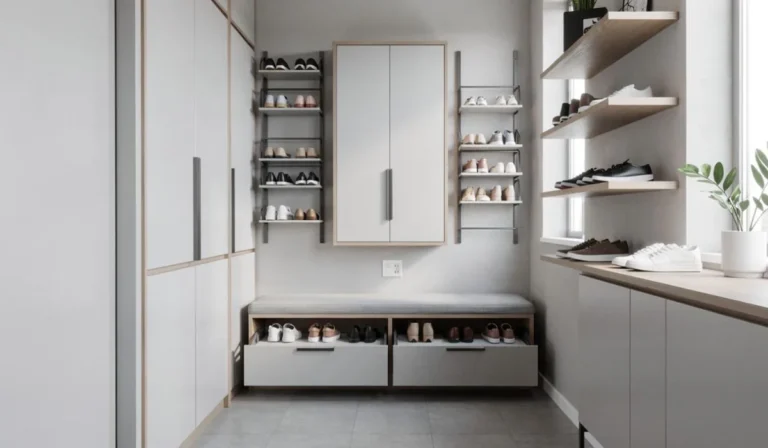

Shoe Storage Ideas for Entryway | 25 Smart Ways to Organize Shoes
The entryway is the first area you see when you enter your home, so keeping it tidy can make the entire space feel more organized. Shoes are often the biggest challenge because they come in different sizes, shapes, and styles and tend to pile up near the door.
The good news is that you don’t need a huge hallway to create an organized shoe station. With the right shoe storage ideas for entryway, you can make use of walls, corners, benches, cabinets, baskets, and even unused spaces under furniture.
Whether you have a tiny apartment entrance, a narrow hallway, or a spacious foyer, these practical shoe organization ideas can help keep footwear accessible without creating visual clutter.
What Makes a Good Entryway Shoe Storage Solution?
A useful entryway shoe organizer should do more than simply hide footwear. It should make your daily routine easier while keeping shoes contained and the entrance looking neat.
Consider these factors before choosing a storage solution:
- Available floor space
- Number of people in the household
- Number of shoes you need to store
- Open versus closed storage
- Ease of access
- Ventilation
- Cleaning requirements
- Overall entryway style
- Budget
For a busy family, open cubbies may be more convenient. For a minimalist entryway, a slim cabinet can keep everything hidden.
25 Shoe Storage Ideas for Entryway:

From furniture-based solutions to simple DIY organizers, there are plenty of ways to store shoes near the front door.
1. Slim Shoe Cabinet
A slim shoe cabinet is one of the best options for a narrow entryway. Many designs use vertical compartments, allowing you to store multiple pairs without taking up much floor space.
Choose a cabinet that is shallow enough to leave a comfortable walking path.
2. Shoe Storage Bench
A shoe bench combines seating and storage in one piece of furniture.
You can sit down while putting on or removing shoes, while the compartments underneath hold everyday footwear.
This is particularly useful for families, children, and anyone who wants a more functional entryway.
3. Open Shoe Cubbies
Open cubbies make shoes easy to see and grab.
Assigning one or two compartments to each family member can prevent footwear from becoming mixed together.
4. Entryway Shoe Rack
A traditional shoe rack is an affordable and simple solution. It can sit directly beside the door and provide multiple levels for footwear.
Choose a compact rack for small entrances or a larger multi-tier model for busy households.
5. Wall-Mounted Shoe Storage
When floor space is limited, look upward.
Wall-mounted shoe organizers can free up valuable floor area while keeping footwear organized. This approach can work particularly well in small apartments and narrow hallways.
6. Floating Shoe Shelves
Floating shelves create a lightweight, modern appearance.
Install several shelves vertically near the entrance and use them to display frequently worn shoes while keeping the floor clear.
7. Shoe Storage Baskets
Large baskets are an easy way to contain casual shoes, slippers, sandals, or children’s footwear.
Instead of arranging every pair perfectly, simply place them inside labeled baskets.
8. Woven Baskets for a Natural Look
If you prefer a warm, cozy entryway, woven baskets can add texture while providing useful shoe storage.
Place them underneath a console table or entryway bench for a discreet solution.
9. Shoe Storage Under a Bench
If you already have an entryway bench, don’t waste the space underneath it.
Use low baskets, shoe trays, or open shelves to turn the empty area into functional footwear storage.
10. Built-In Entryway Shoe Cabinets
Built-in cabinetry can provide a polished solution for larger homes or renovation projects.
You can customize the shelves according to the types of shoes your household owns, including boots, sneakers, sandals, and dress shoes.
11. Narrow Shoe Rack for Small Entryways
A narrow shoe rack can be ideal when every inch matters.
Look for a tall, slim design that provides multiple storage levels without extending too far into the walkway.
12. Behind-the-Door Shoe Organizer
The back of an entryway closet or interior door can provide surprisingly useful storage space.
Hanging organizers with pockets can hold lightweight footwear such as sandals, slippers, and flats.
13. Shoe Storage Inside an Entryway Closet
If your entrance has a closet, dedicate one section to shoes.
Install adjustable shelves or stackable organizers to make better use of vertical space.
Read Next: Types Of Soles In Sports Shoes | Better Comfort and Performance
14. Pull-Out Shoe Drawers
Pull-out drawers make it easier to access footwear without moving other pairs.
They’re particularly useful in built-in cabinets and custom entryway furniture.
15. Ladder Shoe Shelf
A ladder-style shelf provides vertical storage while giving the entryway a decorative appearance.
Use the lower shelves for frequently worn shoes and the higher levels for less-used pairs.
16. Pegboard Shoe Organizer
A pegboard can be customized with shelves, hooks, and baskets.
This is an excellent choice for homeowners who like flexible DIY organization because the layout can be changed whenever storage needs change.
17. DIY Wooden Shoe Rack
A basic wooden shoe rack can be built using boards and simple shelving.
The advantage of DIY storage is that you can customize its width, height, and number of shelves to match your entryway.
18. Industrial Pipe Shoe Rack
For an industrial-style home, combine metal pipes with wooden shelves.
The result can provide sturdy shoe storage while functioning as part of the entryway decor.
19. Repurposed Bookshelf
An old bookshelf can become an inexpensive shoe organizer.
Simply clean it, adjust the shelves if necessary, and place it near the entrance.
This is a practical way to give old furniture a second purpose.
20. Shoe Storage With Coat Hooks
Create a complete entryway station by combining shoe storage with hooks for coats, hats, bags, and umbrellas.
A bench underneath the hooks can provide both seating and footwear storage.
21. Rotating Shoe Rack
A rotating shoe rack can make use of vertical space while allowing you to access different pairs by turning the organizer.
This can be useful when you have many shoes but limited floor area.
22. Under-Stair Shoe Storage
The space underneath a staircase can be an excellent location for hidden shoe storage.
Depending on the structure, you can add drawers, shelves, cabinets, or pull-out compartments.
23. Shoe Drawers Under the Stairs
For a custom solution, shallow drawers can turn unused space beneath stairs into a concealed shoe station.
This keeps footwear out of sight while maximizing otherwise difficult-to-use space.
24. Mudroom Shoe Storage
If your home has a mudroom, dedicate a specific zone to footwear.
Combine cubbies, benches, hooks, baskets, and shoe trays to create a practical drop zone for the entire family.
25. Minimalist Shoe Storage Station
For a clean and uncluttered entryway, keep only frequently worn shoes near the door.
Use a simple cabinet or one small rack and move seasonal or rarely worn footwear elsewhere.
Small Entryway Shoe Storage Ideas
A tiny entrance doesn’t mean you have to live with a pile of shoes.
The key is to prioritize vertical and hidden storage.
Use Vertical Space
Tall shoe cabinets can provide significant capacity while using relatively little floor area.
Choose Multi-Purpose Furniture
An entryway bench with storage underneath can serve two purposes without requiring separate pieces of furniture.
Keep the Floor Clear
Wall-mounted shelves, hanging organizers, and floating cabinets can help create the impression of a more spacious entrance.
Narrow Hallway Shoe Storage Ideas:


Narrow hallways require careful consideration because bulky furniture can interfere with movement.
Try a Slim Cabinet
A shallow shoe cabinet can keep footwear organized without protruding too far into the hallway.
Use Vertical Shelving
Tall, narrow storage can provide more capacity than a wide rack while preserving walking space.
Consider Closed Storage
Cabinet doors can hide footwear and make a narrow hallway look less visually crowded.
Entryway Shoe Storage Ideas for Families
Families often need more storage because several people may wear different shoe sizes and styles.
Assign Individual Storage Areas
Give each family member a basket, cubby, or shelf. This makes it easier to find shoes and encourages everyone to put them away.
Add a Shoe Bench
A bench provides a convenient place for children and adults to sit while putting on footwear.
Create a Daily Shoe Zone
Keep frequently worn shoes near the entrance while storing formal, seasonal, and rarely used footwear elsewhere.
Entryway Shoe Storage Ideas for Apartments
Apartment entrances often have limited storage, so compact solutions are especially valuable.
Use a Freestanding Slim Rack
A small rack can fit into a narrow corner without requiring permanent installation.
Try Under-Bench Storage
If you have a small bench, baskets underneath can add considerable storage capacity.
Make Use of Door Space
Hanging shoe organizers can turn unused door surfaces into storage.
Stylish Shoe Storage Ideas for Entryway
Storage doesn’t have to look purely functional. The right piece can become part of the room’s decor.
Use Matching Baskets
Matching baskets create a coordinated appearance and make open storage look intentional.
Choose Furniture That Matches Your Decor
A wooden shoe cabinet can complement traditional interiors, while simple white or neutral furniture can suit minimalist spaces.
Add Decorative Elements
Place a mirror, artwork, plant, or small decorative object above a shoe cabinet or bench to create a finished entryway.
Shoe Storage Ideas for Boots
Boots need more vertical clearance than sneakers and flats.
Tall Open Shelves
Tall compartments allow boots to stand upright without being folded or squeezed into small spaces.
Boot Trays
A boot tray can contain mud and moisture after rainy or snowy weather.
Dedicated Boot Storage
If you own several pairs of tall boots, consider giving them their own section in a closet or tall cabinet.
Shoe Storage Ideas for Kids
Children’s shoes can quickly turn an entryway into a cluttered space.
Low Cubbies
Low storage allows children to reach their own shoes and return them after use.
Labeled Bins
Use labels or pictures to help younger children identify their storage area.
Small Shoe Baskets
A dedicated basket for each child can provide a simple drop zone for everyday footwear.
How to Keep Entryway Shoe Storage Organized
Even the best shoe organizer can become messy without a simple routine.
Store Everyday Shoes Near the Door
Keep the shoes you wear most frequently in the easiest-to-reach location.
Rotate Seasonal Footwear
Move winter boots, sandals, or other seasonal footwear into less accessible storage when they aren’t needed.
Avoid Overfilling
When every compartment is packed, putting shoes away becomes difficult. Leave enough room to remove and replace footwear easily.
Clean Shoes Before Storage
Remove excess dirt and moisture before placing shoes inside enclosed storage.
Use a Shoe Tray
A tray can help contain mud, rainwater, and loose dirt, especially during wet weather.
Open vs. Closed Shoe Storage
Both approaches have advantages.
| Storage type | Advantages | Best for |
|---|---|---|
| Open rack | Easy access and visibility | Everyday shoes |
| Closed cabinet | Hides clutter | Minimalist entryways |
| Cubbies | Organized individual spaces | Families |
| Baskets | Flexible and inexpensive | Casual footwear |
| Bench storage | Seating plus storage | Functional entrances |
| Wall storage | Saves floor space | Small entryways |
Open storage is convenient because you can immediately see your footwear. Closed storage, on the other hand, can make the entrance look cleaner and more streamlined.
How Many Shoes Should You Keep in the Entryway?
There is no universal number, but keeping only regularly used footwear near the entrance is usually more manageable than storing your entire shoe collection there.
A useful approach is to keep:
- Everyday sneakers
- Frequently worn casual shoes
- Current-season footwear
- House shoes or slippers
- Weather-appropriate shoes
Move formal shoes, special-occasion footwear, and out-of-season pairs to another storage location.
What Should You Look for in an Entryway Shoe Organizer?
Before buying or building shoe storage, measure the available space.
Measure the Width and Depth
Make sure the organizer won’t block doors or reduce the walking area.
Check the Height
If you’re using vertical storage, measure the ceiling height and account for any trim or wall features.
Think About Shoe Sizes
Large men’s shoes, boots, and children’s footwear require different amounts of storage space.
Consider Ventilation
If shoes are stored immediately after outdoor use, airflow can be useful. Avoid trapping damp footwear in an enclosed cabinet.
Frequently Asked Questions
What is the best shoe storage for an entryway?
The best option depends on your available space and household needs. Slim cabinets, shoe benches, cubbies, open racks, and baskets are all practical choices.
How do I store shoes in a small entryway?
Use vertical storage, slim cabinets, wall-mounted shelves, under-bench baskets, or behind-the-door organizers to maximize limited space.
How can I hide shoes in my entryway?
A closed shoe cabinet, storage bench, built-in cabinet, or concealed drawers can keep footwear out of sight while maintaining an organized appearance.
What is the best shoe storage for a narrow hallway?
A shallow shoe cabinet or tall, narrow shoe rack is often a practical solution because it provides storage without taking up too much walking space.
How do I organize lots of shoes in a small entryway?
Prioritize frequently worn footwear and use vertical storage. Cubbies, stackable shelves, and tall cabinets can increase capacity without dramatically increasing the floor footprint.
Should entryway shoe storage have doors?
Not necessarily. Open storage provides easier access and ventilation, while closed cabinets hide clutter and can create a cleaner visual appearance.
How do I keep shoes from making my entryway look messy?
Limit the number of shoes kept near the door, give each pair a designated location, use baskets or cubbies, and regularly move seasonal footwear to another storage area.
What can I use instead of a shoe rack?
You can use baskets, cubbies, shelves, cabinets, benches, drawers, pegboards, bookshelves, or wall-mounted organizers instead of a traditional shoe rack.
How do you store shoes without a closet?
Use a freestanding cabinet, storage bench, baskets, wall shelves, under-stair compartments, or a slim vertical shoe organizer.
Is a shoe bench good for an entryway?
Yes. A shoe bench can combine seating and footwear storage, making it especially useful in busy entryways and family homes.
How can I make DIY shoe storage for an entryway?
Simple DIY options include building wooden shelves, repurposing a bookshelf, creating a pegboard organizer, adding baskets under a bench, or constructing a custom cubby system.