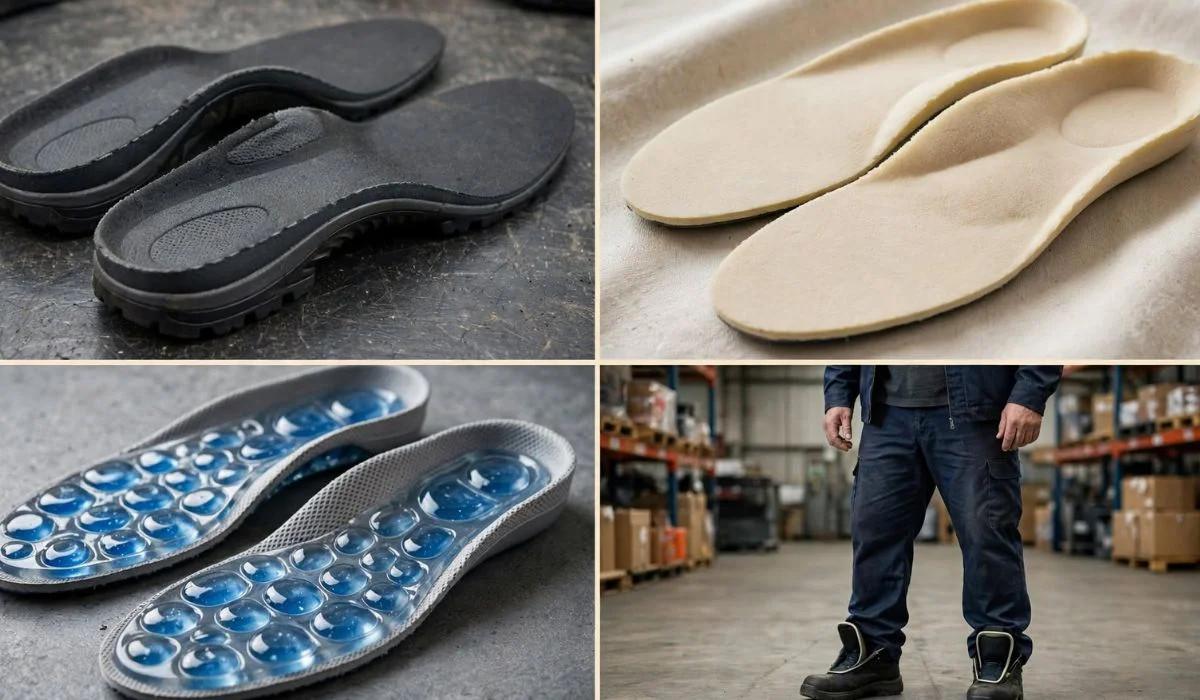
Best Insoles For Standing All Day For Heavy Person | Top Supportive Picks
Standing for eight, ten, or twelve hours can be especially demanding when your feet carry more body weight throughout the day. The right insoles can improve underfoot support, distribute pressure more evenly, and provide cushioning where your feet need it most. However, the softest insole is not automatically the best choice for a heavy person. A supportive design with a stable arch, deep heel cup, durable materials, and appropriate cushioning is usually more useful for long periods of standing. This guide explains what to look for and highlights some of the best insoles for standing all day for a heavy person.
What Makes an Insole Good for a Heavy Person?
Body weight increases the mechanical load placed on the feet during standing and walking. Because of this, an insole that feels comfortable for a short period may compress too much during a long work shift.
For heavier users, durability and structure matter alongside cushioning. A well-designed insole should maintain its shape rather than flatten quickly under repeated loading.
Look for Strong Arch Support
Arch support is one of the most important features when choosing insoles for standing all day.
A structured or semi-rigid arch can provide more support than a very soft foam insert. The correct amount of support depends on your natural arch height and how your feet move.
Don’t choose an extremely high arch simply because it looks more supportive. An arch that does not match your foot can create uncomfortable pressure.
Choose a Deep Heel Cup
A deep heel cup helps position the heel within the insole and can improve stability.
For someone standing for many hours, heel stability can be particularly valuable because the feet remain under continuous load. Deep heel cups are commonly recommended as part of a supportive all-day standing insole.
Prioritize Durable Cushioning
Cushioning is useful, especially on concrete, tile, and other hard surfaces. However, soft cushioning alone isn’t enough.
Look for materials that provide cushioning while maintaining their shape. Dense foam, EVA-based cushioning, and other durable materials can provide a better balance between comfort and support.
Best Insoles for Standing All Day for Heavy Person:

There isn’t one perfect insole for every heavier person. Your arch type, footwear, job, standing surface, and existing foot problems all affect the choice.
Here are several options worth considering.
1. PowerStep Pinnacle Maxx — Best Overall for Higher Support Needs
The PowerStep Pinnacle Maxx is a strong option for people who need firm support during long periods on their feet. It combines a firmer support shell with an angled heel platform, deep heel cradle, and cushioning throughout the footbed. The manufacturer specifically positions it for people experiencing overpronation and needing greater stability.
PowerStep Pinnacle Maxx official product page
Best for: Higher support needs, overpronation, work shoes, athletic shoes, and long shifts.
Why consider it: The firmer construction can provide more structure than a basic soft foam insole.
Potential drawback: A structured insole can feel firm at first, particularly if you are accustomed to very soft inserts.
2. PowerStep Pinnacle — Best Balanced Support
The PowerStep Pinnacle offers a combination of arch support and cushioning without the more aggressive structure of the Maxx version.
It can be a reasonable starting point for someone who wants more support than a standard factory footbed but doesn’t necessarily need maximum motion control.
Best for: Everyday standing, walking, work, and general foot support.
Why consider it: It provides a middle ground between cushioning and structured support.
Best Insoles for Heavy Person Standing on Concrete
Concrete floors are particularly unforgiving because they provide very little cushioning compared with softer surfaces.
If your job requires standing on concrete for most of the day, consider an insole that combines a stable heel and arch structure with shock-absorbing cushioning. A supportive shoe and an anti-fatigue floor mat can also complement the insole.
What to Look for on Hard Floors
For concrete standing, prioritize:
- Durable cushioning
- Deep heel support
- Stable arch structure
- Good pressure distribution
- Moisture management
- Enough space inside the shoe
A very thick insole isn’t automatically better. If it makes the shoe too tight, it can create additional pressure around the toes and sides of the foot.
Best Insoles for Overweight People With Flat Feet
Flat feet don’t automatically mean you need the highest possible arch support.
The better approach is to choose an insole with a supportive arch contour that matches your foot and a stable heel cup. For people with significant overpronation, more structured options may be appropriate.
Why Flat Feet Need the Right Support
When an arch collapses or pronates excessively, a stable insole may help control unwanted foot movement.
PowerStep’s Pinnacle collection includes different designs for low, neutral, and high arches, allowing the support level to be matched more closely to the user’s foot type.
If you have severe or persistent discomfort, a professional assessment can be more useful than repeatedly buying different generic insoles.
Read Next: How To Wash Sports Shoes
Best Insoles for Heavy Person With High Arches
High arches need a different approach.
A highly rigid, aggressive arch isn’t necessarily the answer. High-arched feet can benefit from cushioning and pressure distribution because less of the foot may naturally contact the ground.
Focus on Cushioning and Pressure Distribution
For high arches, consider:
- Support that matches your arch
- Adequate heel cushioning
- Forefoot cushioning
- Shock absorption
- A comfortable, non-aggressive arch contour
Some manufacturers offer high-arch-specific versions rather than a one-design-fits-all insert.
Best Insoles for Standing All Day at Work:

Your workplace can change which insole makes sense.
A nurse, retail worker, restaurant employee, warehouse worker, teacher, factory worker, or cashier may spend hours standing but have very different shoe requirements.
For Work Boots
Work boots typically have more interior volume, so they can accommodate a structured full-length insole more easily.
Look for:
- Firm arch support
- Deep heel cup
- Durable cushioning
- Moisture-resistant or breathable top material
- Compatibility with removable factory insoles
For Athletic Shoes
Running and walking shoes often have removable footbeds, making them easier to modify.
Make sure the replacement insole doesn’t make the shoe too tight around the toes. A supportive insert cannot work properly if your footwear becomes uncomfortable.
How to Choose Insoles for a Heavy Person
Instead of choosing based only on reviews or thickness, evaluate the insole using several factors.
1. Check Your Arch Type
Determine whether you have low, medium, or high arches.
An insole should support your foot rather than force it into an unnatural position.
2. Consider Your Standing Surface
Think about where you spend most of your day.
Standing on:
- Carpet
- Rubber flooring
- Wood
- Tile
- Concrete
can create different comfort requirements.
Hard flooring generally makes cushioning and pressure distribution more important.
3. Look at Your Shoe
The best insole can still feel terrible inside an unsuitable shoe.
Check whether your shoe has:
- A removable factory footbed
- Enough toe room
- Adequate width
- A stable heel
- Sufficient overall volume
Don’t force a thick insole into an already tight shoe.
4. Consider How Long You Stand
Standing for two hours is very different from standing for a full 10-hour shift.
If you’re on your feet most of the workday, durability becomes especially important because the insole receives repeated loading over many hours.
Firm Insoles vs Soft Insoles for Heavy People
This is one of the biggest questions when shopping for supportive inserts.
When Firm Support May Be Better
A firm or semi-rigid insole may be preferable if you need:
- More arch control
- Better heel stability
- Support for overpronation
- A structure that doesn’t quickly flatten
- Greater stability during long shifts
When Softer Cushioning May Be Better
More cushioning may be useful when your primary problem is pressure from hard flooring or when a rigid orthotic feels uncomfortable.
The goal isn’t maximum firmness or maximum softness. The ideal balance is support plus cushioning.
Are Gel Insoles Good for Heavy People?
Gel insoles can feel comfortable because gel provides cushioning and helps reduce the sensation of impact.
However, gel alone doesn’t necessarily provide enough structural support for someone who spends all day standing.
Don’t Confuse Softness With Support
A very soft insole may feel wonderful when you first put it on. But if it compresses substantially during a long shift, it may not provide the same level of support later in the day.
For higher-load use, consider an insole that combines cushioning with a supportive structure rather than relying entirely on gel.
How Thick Should Insoles Be for a Heavy Person?
There isn’t a universal thickness that works for everyone.
A thick insole may provide additional cushioning, but thickness can reduce the space available inside the shoe. If your toes become crowded or the top of your foot presses against the shoe, the insole may actually make your footwear less comfortable.
Fit Matters More Than Thickness
A properly fitted moderate-thickness insole can be more useful than an extremely thick insert that doesn’t fit the shoe.
After installing an insole, check:
- Toe room
- Heel positioning
- Arch comfort
- Side-to-side pressure
- Overall shoe stability
How to Break In New Insoles
Don’t necessarily wear a new structured insole for an entire 10-hour shift on day one.
Start gradually.
A Simple Break-In Routine
Try wearing the new insoles for a shorter period at first. If they feel comfortable, gradually increase the amount of time you wear them over several days.
This gives you an opportunity to determine whether the arch contour and overall shape work for your feet.
If you develop significant pain, numbness, or persistent discomfort, stop using the insole and consider getting professional advice.
How Often Should Heavy People Replace Insoles?
Replacement depends on the insole’s materials, usage, body weight, activity level, and work environment.
Someone who wears the same insoles every day for long shifts may wear them out faster than someone who uses them occasionally.
Signs Your Insoles Need Replacement
Replace them when you notice:
- Flattened cushioning
- Crushed foam
- Cracks
- Uneven wear
- Loss of arch support
- Heel instability
- New discomfort after previously comfortable use
Don’t keep using an insole simply because it still looks intact. Loss of structure can occur before obvious external damage.
Can Insoles Help With Foot Pain From Standing All Day?
Supportive insoles may help improve comfort by providing cushioning, stability, and pressure distribution, but they aren’t a guaranteed treatment for every cause of foot pain.
Experts commonly emphasize arch support, cushioning, and deep heel support for people who stand for long periods.
If pain is severe, persistent, worsening, or accompanied by swelling, numbness, weakness, or difficulty walking, it’s better to speak with a healthcare professional rather than relying solely on an insole.
How to Get Better Results From Your Insoles
Insoles work best as part of an overall footwear strategy.
Pair Them With Supportive Shoes
Choose shoes that fit correctly and provide sufficient width, stability, and cushioning.
An excellent insole cannot completely compensate for a shoe that is too small, worn out, unstable, or poorly fitted.
Use an Anti-Fatigue Mat When Appropriate
If you’re standing in one location for much of your shift, an anti-fatigue mat can complement supportive footwear.
This can be especially useful at workstations where you remain on your feet for extended periods.
Best Insoles for Standing All Day for Heavy Person: Quick Comparison
| Insole Type | Best For | Main Feature |
|---|---|---|
| PowerStep Pinnacle Maxx | Higher support needs | Firm support + cushioning |
| PowerStep Pinnacle | General standing | Balanced support |
| High-arch insole | High arches | Arch-specific contour |
| Low-arch insole | Flat feet | Low-arch support |
| Cushioned work insole | Hard floors | Shock absorption |
| Custom orthotic | Complex foot needs | Personalized support |
The PowerStep Pinnacle Maxx is particularly worth considering when you need firmer support and greater stability, while standard Pinnacle-style support may be a better starting point for general all-day use.
What Is the Best Insole for Standing All Day for a Heavy Person?
For many heavier people who spend long hours standing, a durable, structured insole with a deep heel cup, appropriate arch support, and substantial cushioning is a better starting point than a very soft foam or gel insert.
The PowerStep Pinnacle Maxx is one example of this support-first design, particularly for people who need additional stability or have overpronation.
But “best” depends on your foot shape. Someone with high arches may need a different design from someone with flat feet, and someone with persistent foot pain may benefit more from a professionally fitted orthotic.
Frequently Asked Questions
Are insoles worth it for heavy people who stand all day?
They can be worthwhile when the shoe’s original footbed doesn’t provide enough support or cushioning. Look for durable construction, appropriate arch support, heel stability, and cushioning rather than choosing based solely on softness.
What type of insole is best for a heavy person?
A supportive, durable insole with a deep heel cup, appropriately matched arch support, and cushioning is generally a good starting point. The correct design depends on your arch type and footwear.
Are soft insoles good for overweight people?
Soft insoles can provide comfort, but softness alone may not provide sufficient structure during prolonged standing. A combination of cushioning and support is usually more useful.
Are firm insoles better for heavy people?
Not automatically. Firm support can be helpful for stability, but the arch contour needs to match your foot. An excessively firm or incorrectly shaped insole can feel uncomfortable.
What are the best insoles for standing on concrete all day?
Look for durable cushioning combined with a stable heel cup and appropriate arch support. Concrete provides little natural cushioning, so pressure distribution and shock absorption become especially important.
Can insoles help with standing all day foot fatigue?
Supportive insoles may improve comfort and help distribute pressure across the foot. However, persistent fatigue or pain can have causes that require more than an insole.
How long do heavy-duty insoles last?
Lifespan varies considerably according to usage and construction. Daily use during long shifts can wear an insole faster than occasional use. Replace it when cushioning or support noticeably deteriorates.
Should I remove the original shoe insole?
If the shoe has a removable factory footbed, many full-length replacement insoles are designed to go in its place. Check the product instructions before installing one.
Can a heavy person use regular shoe insoles?
Yes, but regular soft inserts may not provide the durability or structure needed for prolonged higher-load use. Choose based on support, materials, fit, and intended use rather than weight alone.
Should I see a podiatrist for custom orthotics?
Consider professional assessment if you have persistent foot pain, significant alignment concerns, or repeatedly fail to find a comfortable over-the-counter insole. Custom orthotics can be designed around an individual’s foot mechanics rather than relying on a generic shape.
What is more important: cushioning or arch support?
Both matter, but the priority depends on your feet and working environment. For long periods of standing, a combination of stable support and durable cushioning is generally more useful than maximizing either feature alone.