
Best Insoles For Standing All Day Heel Pain | Top Supportive Picks
Standing for several hours can put continuous stress on the heels, especially when you work on hard floors or wear shoes with limited support. The right insoles may help by improving cushioning, supporting the arch, stabilizing the heel, and distributing pressure more evenly across the foot. However, the best insoles for standing all day heel pain depend on what is causing the discomfort, your foot shape, footwear, and the type of surface you stand on. This guide explains what features to look for, which types of insoles may work best, how to use them, and when heel pain needs professional attention.
What Causes Heel Pain When Standing All Day?
Heel pain can have several possible causes. Spending long periods on your feet increases repetitive loading through the feet and heels, which may aggravate an existing problem.
Common contributors include:
- Prolonged standing
- Hard flooring
- Poorly cushioned footwear
- Inadequate arch support
- Excessive foot pronation
- Tight calf muscles
- Increased activity
- Worn-out shoes
- Plantar fasciitis
- Heel fat-pad irritation
Because different conditions can produce similar symptoms, an insole should not be viewed as a universal treatment.
Why Hard Floors Can Make Heel Pain Worse
Concrete, tile, and other hard surfaces provide little cushioning. When you stand for hours, your heels repeatedly bear load without much assistance from the surface beneath you.
A well-cushioned insole can add another layer between your heel and the hard floor. A supportive design can also help distribute pressure rather than allowing one area of the foot to absorb most of the load.
What Should You Look for in Insoles for Heel Pain?
Not every cushioned insole is suitable for all-day standing. The most useful features depend on your foot mechanics and the source of your discomfort.
Heel Cushioning
Heel cushioning is an obvious starting point when heel pain is your main concern.
Look for an insole that provides cushioning underneath the heel without feeling excessively soft or unstable.
A deep heel cup can also help keep the heel positioned consistently inside the shoe.
Arch Support
Arch support can help distribute pressure across the foot and may be particularly useful when excessive pronation contributes to discomfort.
The important point is appropriate arch support. A higher arch isn’t automatically better.
An insole should support your natural arch without creating painful pressure.
Shock Absorption
If you stand and walk on concrete throughout your workday, shock absorption can make your footwear feel more comfortable.
Materials such as EVA and other specialized cushioning foams are commonly used to provide a combination of cushioning and resilience.
Stable Construction
A very soft insole may feel comfortable initially but can compress significantly under repeated loading.
For all-day standing, look for an insert that combines cushioning with enough structure to maintain its shape.
Best Types of Insoles for Standing All Day Heel Pain:

There isn’t one universally best insole for heel pain. Different designs can be useful for different foot types and needs.
Cushioned Heel Insoles
These are designed primarily to provide additional cushioning beneath the heel.
They can be useful when your main complaint is impact or pressure from hard surfaces.
Best for: People who want extra heel cushioning without a highly structured orthotic.
Arch-Support Insoles
These combine cushioning with a contoured arch.
They may be useful when heel discomfort is associated with poor foot support or excessive pronation.
Best for: People who need more structure than a basic foam insert provides.
Semi-Rigid Orthotic Insoles
Semi-rigid designs typically provide a stronger support structure while still incorporating cushioning.
They can be a useful option for people who need stability during long periods on their feet.
Best for: Overpronation, low arches, and people who want structured all-day support.
Custom Orthotics
Custom orthotics are designed around an individual’s foot shape and biomechanics.
They can be considered when over-the-counter insoles don’t provide adequate comfort or when a healthcare professional identifies a specific biomechanical issue.
Best for: Persistent or complicated foot problems requiring individualized support.
Best Insoles for Standing All Day With Plantar Fasciitis
Plantar fasciitis is a common cause of heel pain and can be particularly uncomfortable during prolonged standing.
If plantar fasciitis is contributing to your symptoms, an insole with appropriate arch support and heel cushioning may help reduce strain and improve comfort.
Look for a Supportive Heel Cup
A deep heel cup can help stabilize the heel within the shoe.
Combined with suitable arch support, this may help distribute pressure more evenly through the foot.
Don’t Choose the Softest Insole Automatically
It is tempting to buy the thickest or softest insole when your heel hurts.
However, excessive softness can reduce stability. For some people, a moderately cushioned insole with firm arch support may feel better during a long shift than a very soft gel insert.
Best Insoles for Heel Pain on Concrete Floors
Standing on concrete can be particularly demanding because the surface is hard and unforgiving.
If you work in a warehouse, factory, restaurant, retail environment, or other location with concrete flooring, consider an insole that combines cushioning with structural support.
Features Worth Prioritizing
For concrete floors, look for:
- Heel cushioning
- Shock absorption
- Durable foam
- Stable heel cup
- Appropriate arch support
- Breathable top material
- Good overall shoe compatibility
An anti-fatigue mat can also complement supportive footwear if your work allows you to use one.
Read Next: Best Insoles For Standing All Day
Best Insoles for Heel Pain and Flat Feet:

People with flat feet may benefit from an insole that provides a supportive contour through the arch and a stable heel platform.
However, flat feet vary considerably. Some people have flexible flat feet, while others have a more rigid foot structure.
Avoid Excessively High Arch Support
An insole that pushes aggressively against your arch can cause discomfort.
Instead, look for a design that provides gradual, comfortable support and allows your foot to sit naturally inside the shoe.
Best Insoles for Heel Pain With High Arches
High arches can create different pressure patterns because less of the foot may contact the ground.
For this foot type, cushioning and pressure distribution can be particularly important.
Balance Cushioning With Support
A high-arch foot doesn’t necessarily need a rigid, high arch insert.
Look for cushioning under the heel and forefoot along with an arch contour that matches your foot.
How to Choose the Right Insoles for Heel Pain
Choosing an insole becomes easier when you consider your entire situation rather than focusing on one feature.
Consider Where You Feel the Pain
Is the discomfort:
- Directly underneath the heel?
- Toward the inner heel?
- Around the back of the heel?
- Along the arch?
- Across the entire bottom of the foot?
The location can provide clues, but it cannot diagnose the underlying problem.
Think About Your Work Surface
Your ideal insole may differ depending on whether you spend most of your day on carpet, wood, tile, concrete, or another surface.
Harder surfaces generally make cushioning more important.
Examine Your Shoes
An insole cannot compensate completely for a poorly fitting shoe.
Your footwear should have adequate:
- Toe room
- Width
- Heel stability
- Cushioning
- Interior volume
If an insole makes your shoes too tight, it may create additional pressure rather than improve comfort.
How Thick Should Insoles Be for Heel Pain?
There is no single ideal thickness.
A thicker insole can provide more cushioning, but it also takes up more space inside the shoe.
If your toes become cramped or your heel starts slipping because the insole raises your foot too much, the insert may be unsuitable for that shoe.
Fit Comes Before Maximum Cushioning
The best insole is one that provides useful cushioning and support while allowing your shoe to remain comfortable.
Don’t select an insole simply because it is advertised as “extra thick.”
Gel Insoles vs Foam Insoles for Heel Pain
Both gel and foam can provide cushioning, but they feel different under the foot.
Gel Insoles
Gel can provide a soft, cushioned sensation and may feel comfortable when standing on hard surfaces.
The downside is that gel alone doesn’t necessarily provide sufficient arch or heel stability.
Foam Insoles
Foam can offer different levels of cushioning and support depending on its density and construction.
Some high-quality foam insoles are designed to combine shock absorption with structural support.
Firm vs Soft Insoles for Heel Pain
This is another area where personal fit matters.
A soft insole can reduce the immediate sensation of pressure, while a firmer design can provide greater stability.
When a Firmer Insole May Help
A structured insole may be worth considering when you experience:
- Excessive pronation
- Poor arch support
- Heel instability
- Foot fatigue during long shifts
When More Cushioning May Be Preferable
Additional cushioning may be useful if your primary complaint is pressure beneath the heel, particularly on hard surfaces.
The ideal solution for many people is somewhere between the two: supportive enough to stabilize the foot and cushioned enough to remain comfortable for hours.
How to Break In New Insoles:
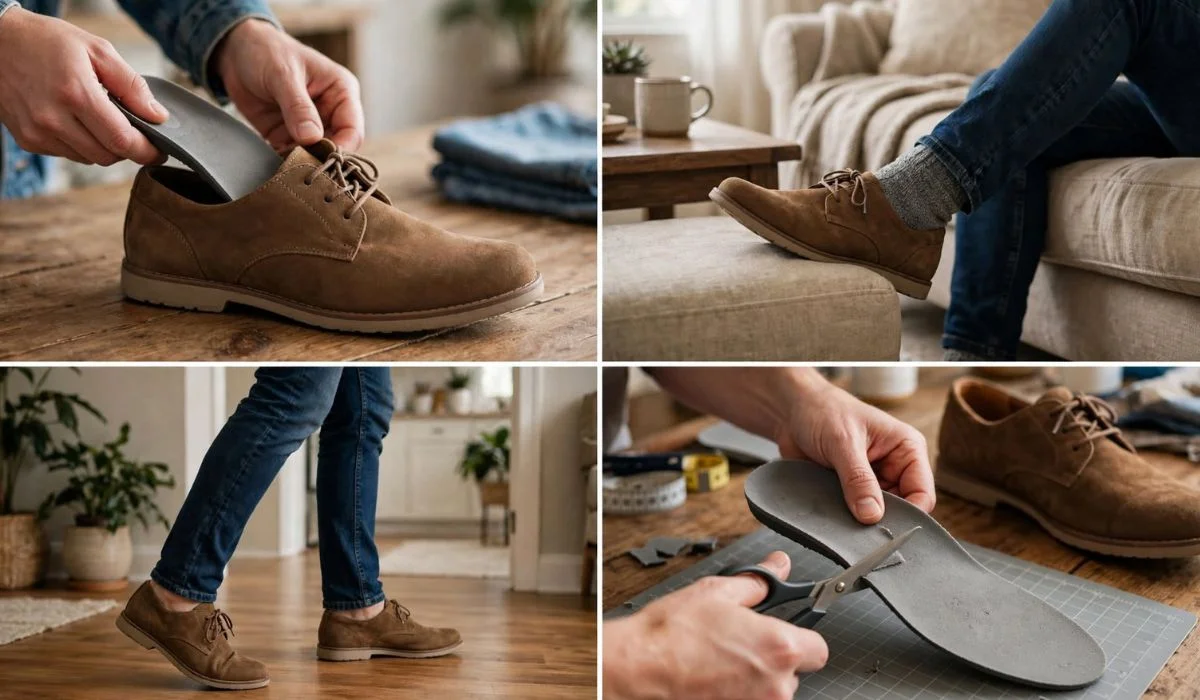
Don’t assume you need to wear new insoles for an entire work shift immediately.
Start with shorter periods of use.
Increase Wear Time Gradually
Try wearing the new insoles for a few hours initially. If they remain comfortable, gradually increase the amount of time you wear them.
A new structured insole may feel different from your original shoe footbed, so gradual adaptation can be more comfortable.
If the insole causes significant or worsening pain, numbness, or unusual pressure, stop using it and reassess the fit.
How to Make Insoles More Comfortable for All-Day Standing
Small changes can make a noticeable difference.
Match the Insole to the Shoe
Make sure the insert sits flat inside the shoe without folding, bunching, or sliding.
If the original footbed is removable, follow the insole manufacturer’s instructions about whether it should be removed before installation.
Keep Shoes in Good Condition
Worn-out shoes can undermine the benefits of a new insole.
Look at the outsole and midsole periodically. If the shoe is visibly compressed, uneven, or unstable, replacing the footwear may be more effective than simply installing another insole.
How Long Do Insoles Last?
There is no fixed replacement schedule because lifespan depends on the material, frequency of use, body weight, activity, work surface, and construction quality.
People who stand for long shifts every day may wear through cushioning more quickly.
Signs You Need New Insoles
Consider replacing them if you notice:
- Flattened cushioning
- Crushed foam
- Visible cracking
- Uneven compression
- Loss of arch support
- Increased foot fatigue
- Heel discomfort returning after previous improvement
An insole doesn’t need to be visibly destroyed before it loses its supportive properties.
Can Insoles Completely Stop Heel Pain?
No. Insoles can improve comfort and support for some people, but they don’t address every cause of heel pain.
Heel pain can result from plantar fasciitis, tendon problems, stress injuries, nerve issues, footwear problems, and other conditions.
If symptoms persist despite changing footwear and reducing aggravating activities, professional evaluation may be appropriate.
When Should You See a Doctor About Heel Pain?
Consider seeking medical advice if heel pain is severe, persistent, worsening, or interfering with normal walking.
Professional evaluation is particularly important if pain follows an injury or occurs with significant swelling, numbness, weakness, redness, or inability to bear weight.
An insole should support your feet, not replace appropriate medical care when a significant problem is present.
Simple All-Day Heel Pain Insole Checklist
Before buying an insole, ask yourself:
- Does it provide adequate heel cushioning?
- Does the arch support match my foot?
- Is the heel cup stable?
- Will it fit inside my current shoes?
- Is the cushioning durable?
- Will it work with my work surface?
- Can I comfortably wear it for several hours?
- Does the manufacturer provide clear sizing information?
- Is the insole appropriate for my type of footwear?
This checklist can help narrow down the options without relying solely on marketing claims.
Best Insoles for Standing All Day Heel Pain: Quick Comparison
| Insole Type | Best For | Main Benefit |
|---|---|---|
| Cushioned heel insole | Heel pressure | Extra cushioning |
| Arch-support insole | Poor foot support | Better pressure distribution |
| Semi-rigid orthotic | Overpronation | Stability and structure |
| High-arch insole | High arches | Better pressure distribution |
| Low-arch insole | Flat feet | Supportive arch contour |
| Custom orthotic | Complex foot needs | Individualized support |
Final Thoughts
The best insoles for standing all day heel pain aren’t necessarily the thickest, softest, or most expensive. A good choice should provide comfortable heel cushioning, appropriate arch support, stable construction, and a secure fit inside your shoes.
If you spend most of your workday standing on concrete or another hard surface, cushioning and pressure distribution become especially important. If your heel pain is persistent or severe, however, finding the underlying cause is more important than repeatedly trying different insoles.
Frequently Asked Questions
What are the best insoles for standing all day with heel pain?
Look for an insole that combines heel cushioning, appropriate arch support, a stable heel cup, and durable construction. The ideal design depends on your foot shape and the cause of your heel pain.
Are cushioned insoles good for heel pain?
They can be helpful when pressure and impact contribute to discomfort. However, cushioning alone may not provide enough support for people whose heel pain is related to poor foot mechanics.
Are gel insoles good for standing all day?
Gel insoles can provide a soft cushioning feel and may be comfortable on hard floors. However, people who need arch or motion-control support may prefer a structured foam or orthotic-style insole.
Can insoles help plantar fasciitis heel pain?
Supportive insoles may improve comfort for some people with plantar fasciitis by providing arch support and heel cushioning. They should be considered part of a broader management approach rather than a guaranteed cure.
Should heel pain insoles be hard or soft?
Neither is universally best. A moderately supportive insole with sufficient cushioning can provide a better balance than an extremely hard or extremely soft insert.
Are thick insoles better for heel pain?
Not necessarily. Extra thickness can provide cushioning but may reduce shoe space and create pressure or fit problems. Proper fit and appropriate support are more important than maximum thickness.
Can I wear heel pain insoles in work boots?
Many work boots can accommodate supportive insoles, particularly when they have removable factory footbeds. Always check the available interior space and make sure your toes aren’t cramped after installing the new insert.
How long does it take for insoles to help heel pain?
It varies depending on the cause of the pain and the individual. A new insole may feel different immediately, but comfort changes can take time. If symptoms worsen rather than improve, stop using the insert and reassess the fit.
Can standing all day cause heel pain?
Yes. Prolonged standing increases the amount of time your feet and heels remain under load, and hard surfaces or inadequate footwear can make discomfort more noticeable.
Should I replace my shoes or buy new insoles for heel pain?
It depends on the condition of your shoes. If the shoes are still structurally sound but lack adequate support or cushioning, new insoles may help. If the footwear is worn out or unstable, replacing the shoes may be the better solution.