
Leather or Synthetic Leather Shoes Which Is Better | Cost, Maintenance, and Style
When choosing a new pair of shoes, one question often comes up: leather or synthetic leather shoes—which is better? Both materials can produce attractive, comfortable, and durable footwear, but they differ in breathability, maintenance, price, water resistance, durability, appearance, and environmental considerations.
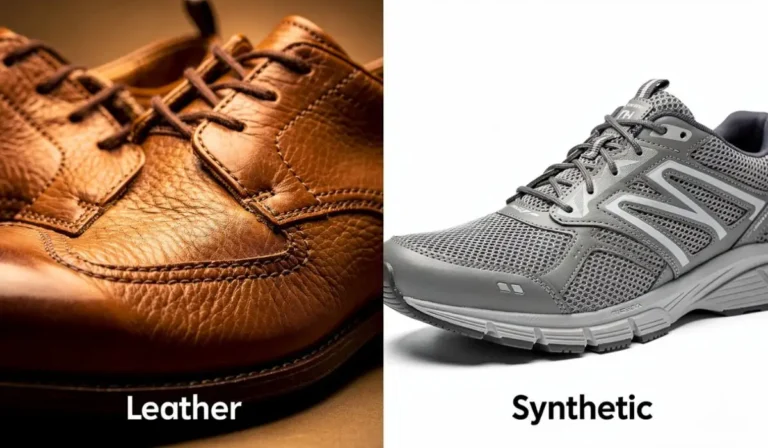
Leather is made from animal hide and has been used in footwear for centuries. Synthetic leather, sometimes called faux leather or vegan leather depending on the material and marketing, is manufactured using materials such as polyurethane (PU) or polyvinyl chloride (PVC). Neither option is automatically best for every person or every type of shoe.
The right choice depends on how you plan to use the shoes, your budget, preferred maintenance routine, and the characteristics you value most.
What Is Real Leather?
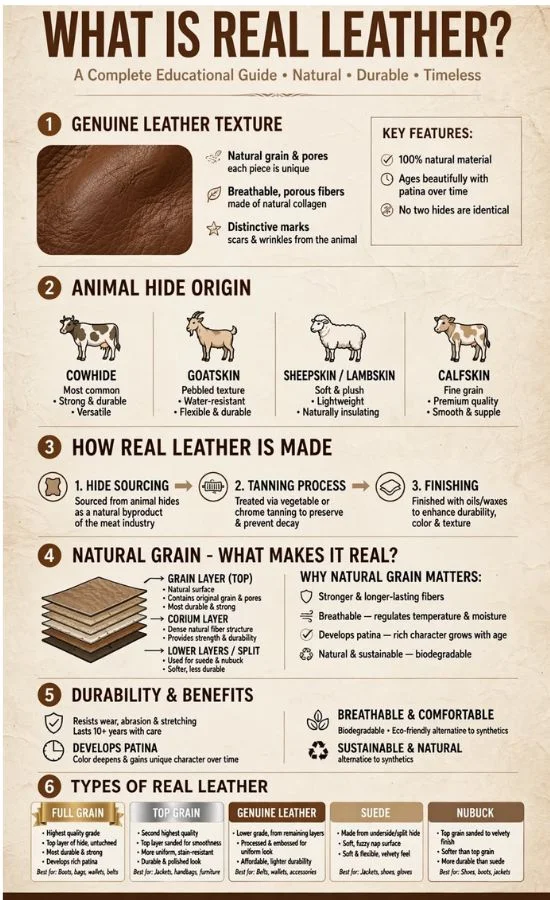
Real leather is made from animal hide that has been processed and treated to create a usable material.
Cowhide is commonly used for footwear, although leather can come from several animal sources.
How Is Leather Made?
The hide typically goes through processes such as:
- Cleaning
- Hair removal
- Tanning
- Drying
- Coloring
- Finishing
Tanning helps stabilize the hide and makes it more suitable for long-term use.
The final characteristics depend on the animal hide, tanning method, leather grade, finishing process, and manufacturing technique.
What Is Synthetic Leather?
Synthetic leather is a manufactured material designed to resemble the appearance and sometimes the performance of natural leather.
Common synthetic leather materials include PU leather and PVC leather.
PU vs. PVC Synthetic Leather
PU synthetic leather generally uses a polyurethane coating and is often softer and more flexible than traditional PVC-based alternatives.
PVC leather uses polyvinyl chloride and can be relatively durable and resistant to certain types of moisture and abrasion.
The quality of synthetic leather varies significantly. A well-made synthetic material can look very different from a cheap, poorly finished imitation.
Leather vs. Synthetic Leather: Quick Comparison:
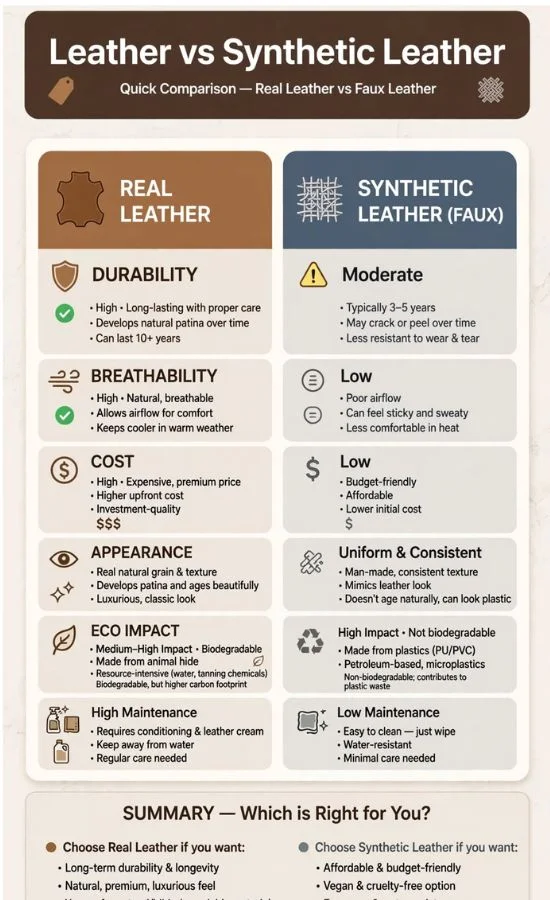
| Feature | Leather | Synthetic Leather |
|---|---|---|
| Material | Animal hide | Manufactured material |
| Price | Usually higher | Usually lower |
| Breathability | Often good | Varies; often lower |
| Durability | Can be excellent | Depends heavily on quality |
| Water resistance | Usually needs treatment | Often naturally more resistant |
| Maintenance | Requires more care | Usually easier |
| Appearance | Develops natural character | Consistent appearance |
| Aging | Can develop patina | May peel or crack depending on material |
| Animal-derived | Yes | Generally no |
| Consistency | Natural variations | More uniform |
Which Is More Durable: Leather or Synthetic Leather?
If you’re comparing high-quality materials, leather can have a major advantage in long-term durability.
Good leather can become more flexible with use and may develop a patina rather than simply looking worn out.
Why Can Leather Last a Long Time?
Leather is a natural material with a fibrous structure. When properly selected, constructed, and maintained, it can withstand substantial use.
However, not all leather shoes are automatically more durable than synthetic shoes.
The quality of the leather, stitching, sole construction, adhesives, and overall shoe design all matter.
What Happens to Synthetic Leather Over Time?
Synthetic leather can remain attractive for years, but some materials eventually develop:
- Cracking
- Peeling
- Flaking
- Surface wear
- Loss of flexibility
The rate depends on the type and quality of the synthetic material, how often the shoes are worn, storage conditions, heat, moisture, and general use.
Which Is More Comfortable?
Comfort depends more on the shoe’s construction and fit than simply whether it is leather or synthetic.
A poorly fitting leather shoe can be much less comfortable than a well-designed synthetic shoe.
Leather Can Become More Adaptable With Wear
Some genuine leather footwear gradually conforms to the wearer’s foot.
This characteristic can make certain leather shoes feel increasingly comfortable over time.
However, leather does not necessarily stretch dramatically, and a shoe that is fundamentally too small should not be expected to become a perfect fit.
Synthetic Materials Can Feel Comfortable Immediately
Synthetic leather can feel smooth and comfortable straight out of the box.
Because manufacturers can control thickness, texture, and flexibility, synthetic materials can also be engineered for particular uses.
Which Material Is More Breathable?
Leather generally has an advantage when it comes to natural breathability, although the final breathability of a shoe depends on the entire design.
A leather upper combined with a non-breathable lining or heavily sealed construction may still feel warm.
Why Does Breathability Matter?
Your feet produce heat and moisture throughout the day.
A breathable shoe can help moisture vapor escape, potentially making the footwear feel more comfortable during extended wear.
Synthetic leather tends to have lower natural breathability, particularly when the material has a dense coating.
Which Is Better for Hot Weather?
For hot conditions, breathable footwear is generally preferable.
Leather can be a reasonable option when the upper and lining are designed to allow airflow and moisture movement.
However, lightweight mesh or textile footwear may outperform both leather and synthetic leather when maximum ventilation is the priority.
Which Is Better for Rain?
Synthetic leather often has an advantage when it comes to resistance to surface moisture.
Its coated construction can prevent water from penetrating the material as easily as untreated leather.
Does That Mean Leather Shoes Can’t Get Wet?
No.
Leather shoes can handle some moisture, especially when properly treated, but prolonged exposure to water can cause problems such as staining, stiffness, discoloration, or damage if the shoes aren’t dried and maintained correctly.
Water resistance also depends on construction, seams, coatings, and the sole.
Which Is Easier to Maintain?
Synthetic leather is generally easier to maintain.
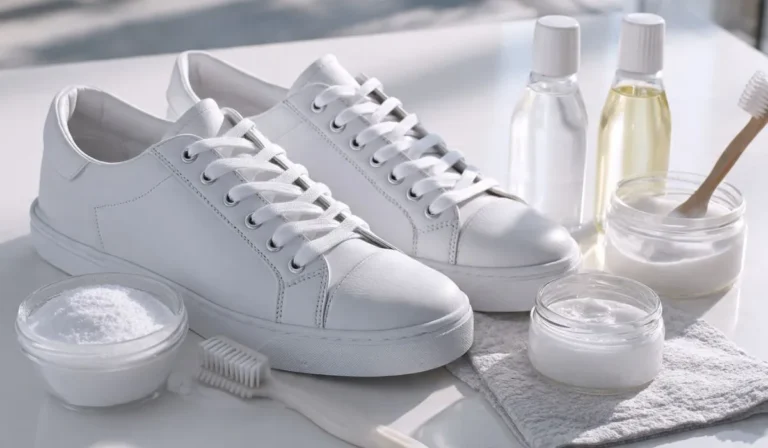
For many synthetic materials, routine cleaning involves wiping the surface with an appropriate damp cloth and following the manufacturer’s care instructions.
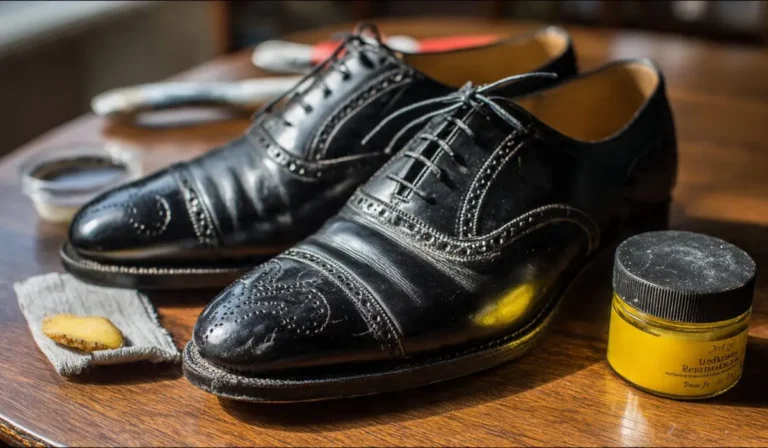
Leather Needs More Attention
Leather may benefit from:
- Regular cleaning
- Conditioning
- Appropriate polishing
- Proper drying
- Protection from excessive moisture
- Suitable storage
The correct care routine depends on the type of leather.
Which Looks More Premium?
This comes down partly to personal preference, but genuine leather is often associated with premium footwear.
Natural leather can have subtle variations in grain and texture that contribute to its appearance.
Leather Can Develop a Patina
One of leather’s distinctive characteristics is its ability to develop a patina.
Over time, high-quality leather may change in color and surface appearance as it is handled, worn, polished, and exposed to everyday conditions.
Some people consider this aging process part of the appeal.
Synthetic Leather Keeps a More Uniform Look
Synthetic leather can provide a consistent color and texture because it is manufactured rather than naturally formed.
This can be an advantage if you prefer a highly uniform appearance.
Which Is More Affordable?
Synthetic leather usually wins on initial purchase price.
Manufacturing synthetic materials can allow footwear brands to produce attractive styles at lower price points.
Leather shoes generally cost more, although price varies widely based on leather quality, brand, craftsmanship, construction, and design.
Does More Expensive Mean Better?
Not necessarily.
A high price doesn’t guarantee superior construction.
When buying shoes, consider the material together with stitching, sole construction, fit, comfort, and expected lifespan.
Which Is Better for Vegan Shoppers?
Synthetic leather is generally the more relevant option for shoppers avoiding animal-derived leather.
However, it’s important to check the manufacturer’s material information because the term “vegan” and the actual composition of a product can vary by brand and product.
Not All Synthetic Leather Is Environmentally Identical
Synthetic leather may avoid animal hide, but that doesn’t automatically make it environmentally superior.
The type of plastic, manufacturing process, durability, coatings, and end-of-life disposal all influence environmental considerations.
Which Has the Smaller Environmental Impact?
There is no simple winner.
Leather production involves livestock, tanning, water use, chemicals, energy, and processing. Synthetic leather commonly relies on manufactured polymers, often derived from fossil-based raw materials.
Durability Matters Too
A shoe that lasts significantly longer may need to be replaced less frequently.
Therefore, instead of asking only whether leather or synthetic leather is “eco-friendly,” consider:
- How long the shoes are likely to last
- How often you’ll wear them
- How easily they can be repaired
- What materials are used
- How they are manufactured
- What happens when they are discarded
Which Is Better for Work Shoes?
For office or professional footwear, both can work well.
Leather is often favored for formal shoes because of its appearance, comfort potential, and ability to develop character.
Synthetic leather can be attractive for people who want lower-cost footwear that’s easy to clean.
Consider Your Workplace
For a dry office environment, appearance and comfort may be the biggest priorities.
For jobs involving moisture, dirt, or frequent cleaning, a material with suitable water and stain resistance may be more practical.
Which Is Better for Everyday Shoes?
There isn’t one universal answer.
If you value longevity, natural material, and the way shoes develop character with age, leather may be appealing.
If you want affordability, easy maintenance, and consistent appearance, synthetic leather may make more sense.
Which Is Better for Formal Shoes?
Leather is often the traditional choice for formal footwear.
Dress shoes made from quality leather can offer a refined appearance and may age attractively when cared for properly.
Synthetic Leather Can Still Look Dressy
Modern synthetic materials can imitate the appearance of leather surprisingly well.
For occasional events, synthetic leather can provide a practical alternative without the higher purchase price of many leather options.
Which Is Better for Children’s Shoes?
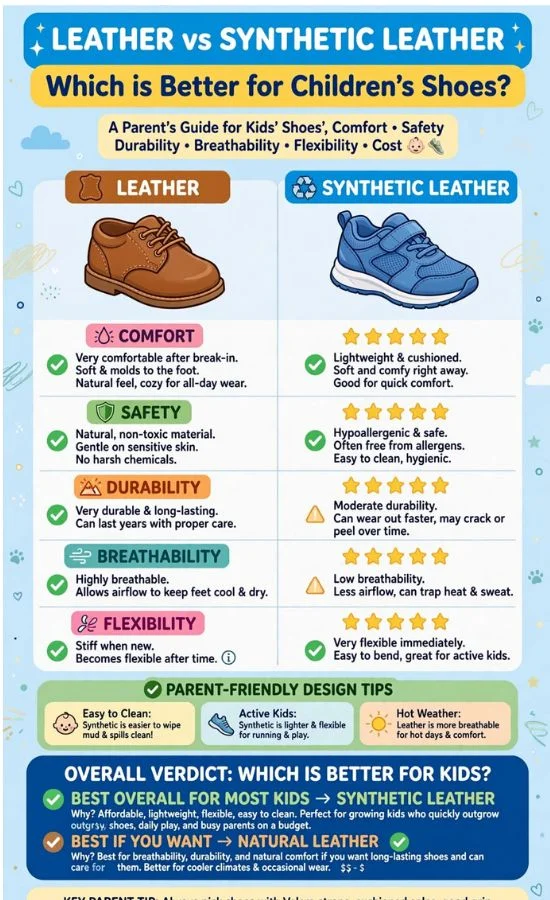
For children’s footwear, fit, flexibility, weight, safety, and comfort should generally take priority over whether the material is natural or synthetic.
Children’s feet are growing, so buying an expensive material isn’t necessarily useful if the shoes will be outgrown quickly.
Look Beyond the Material
When choosing children’s shoes, check:
- Correct size
- Adequate toe room
- Comfortable flexibility
- Secure fastening
- Appropriate traction
- Lightweight construction
How Can You Tell Real Leather From Synthetic Leather?
A label is usually the most reliable starting point.
Look for material descriptions such as:
- Genuine leather
- Full-grain leather
- Top-grain leather
- Split leather
- PU leather
- PVC
- Synthetic leather
- Faux leather
Don’t Rely Only on Appearance
High-quality synthetic leather can look extremely similar to natural leather.
Texture, smell, grain, and flexibility may provide clues, but they aren’t always reliable enough to identify the material with certainty.
Checking the manufacturer’s material specifications is a better approach.
What Is Full-Grain Leather?
Full-grain leather is made from the outer portion of the hide with the natural grain largely retained.
It is commonly regarded as a high-quality leather type because the natural surface remains relatively intact.
How Is It Different From Other Leather?
Leather terminology can be confusing because different products use different grades and finishing methods.
“Leather” alone doesn’t tell you everything about quality. Construction and finishing are also important.
Is Synthetic Leather Waterproof?
Not necessarily.
Many synthetic leather surfaces resist water better than untreated leather, but synthetic leather should not automatically be considered waterproof.
Water can still enter through seams, stitching, openings, zippers, and other parts of the shoe.
Is Leather Waterproof?
Standard leather is not naturally waterproof.
Some leather footwear can be treated or specially constructed for improved water resistance, but prolonged exposure to water can still damage certain leather types.
Always follow the manufacturer’s care instructions.
How Should You Choose Between Leather and Synthetic Leather?
Instead of asking which material is universally better, start with your priorities.
Choose Leather If You Value:
- Long-term durability
- Natural material
- Traditional appearance
- Patina
- Potential repairability
- Breathability
Choose Synthetic Leather If You Value:
- Lower upfront cost
- Easy cleaning
- Consistent appearance
- Resistance to some surface moisture
- Animal-free materials
- Wide variety of styles
Read Next: How Are Shoes Made In A Factory | Materials to Assembly and Quality Control
What Matters More Than the Material?
A shoe’s material is only one part of the equation.
Construction quality can make a major difference.
Look at:
- Stitching
- Sole attachment
- Insole quality
- Outsole durability
- Heel construction
- Fit
- Flexibility
- Lining
- Overall workmanship
A well-made synthetic shoe may outperform a poorly constructed leather shoe, while a high-quality leather shoe can substantially outlast an inexpensive synthetic alternative.
Leather or Synthetic Leather Shoes: Which Is Better Overall?
If your priority is long-term durability and traditional appearance, quality leather may be the better choice.
If your priority is affordability and easy maintenance, synthetic leather can be an excellent alternative.
For hot weather, neither material necessarily beats breathable mesh or fabric footwear. For wet environments, synthetic leather may offer practical surface-water resistance, although no material alone makes an entire shoe waterproof.
Ultimately, the best shoes are the ones that fit properly, suit your activity, meet your material preferences, and provide the durability and comfort you actually need.
Final Verdict:
So, leather or synthetic leather shoes—which is better?
There isn’t a single winner for every situation. Leather can offer durability, breathability, a distinctive aging process, and a premium feel, while synthetic leather generally provides affordability, easy maintenance, consistent appearance, and a broad range of styles.
If you’re buying shoes for years of regular wear and appreciate natural materials, quality leather is worth considering. If you’re looking for an affordable pair that’s simple to maintain or prefer animal-free materials, synthetic leather can be a practical choice.
The smartest purchase isn’t necessarily the shoe made from the “better” material. It’s the shoe whose material, construction, fit, and intended use match your needs.
FAQs
Are leather shoes better than synthetic leather shoes?
Leather can be better for durability, breathability, and long-term aging, while synthetic leather can be better for affordability, easy maintenance, and consistent appearance. The better choice depends on your priorities.
Do synthetic leather shoes last long?
They can. High-quality synthetic leather may provide good durability, but some synthetic materials can eventually crack, peel, or flake. Construction quality and how the shoes are used also affect lifespan.
Is genuine leather more comfortable than synthetic leather?
Not automatically. Leather can become more comfortable as it adapts to the foot, but fit and shoe construction are more important than material alone.
Which is better for rainy weather, leather or synthetic leather?
Synthetic leather often provides better surface resistance to moisture, but neither material automatically makes a shoe waterproof. The seams, construction, lining, and sole also matter.
Do leather shoes breathe better than synthetic leather?
Generally, natural leather can provide better breathability than dense synthetic leather, although the overall shoe design has a major influence on ventilation.
Are synthetic leather shoes waterproof?
No. Some synthetic leather is water-resistant, but water can still enter through seams, openings, and other parts of the shoe.
Are leather shoes worth the extra money?
They can be, especially if you plan to wear them frequently and value durability, natural materials, and the ability to maintain or repair the footwear. However, expensive leather isn’t automatically better than every synthetic alternative.
Is synthetic leather good for everyday shoes?
Yes. Good-quality synthetic leather can work well for everyday footwear, particularly when affordability and easy maintenance are priorities.
Which is easier to clean, leather or synthetic leather?
Synthetic leather is generally easier to clean because many surfaces can be wiped down with an appropriate cloth. Leather often requires a more specific cleaning and conditioning routine.
Does synthetic leather peel?
Some synthetic leather can peel or flake as its surface coating deteriorates. The likelihood depends on the material, quality, age, storage, and amount of use.
Can leather shoes be repaired?
Many leather shoes can be repaired, depending on their construction and the type of damage. Soles, heels, stitching, and certain other components may be replaceable or repairable.
Which is more eco-friendly, leather or synthetic leather?
Neither can be declared universally better. Both have environmental impacts, and factors such as material sourcing, manufacturing, durability, repairability, and disposal should be considered.
Are synthetic leather shoes vegan?
Synthetic leather is generally made without animal hide, but shoppers seeking vegan footwear should check the manufacturer’s complete material information because adhesives, dyes, and other components may vary.
Which is better for hot weather?
Breathable footwear is usually the priority in hot weather. Leather can be reasonably breathable, while dense synthetic leather may feel warmer. Lightweight mesh or textile shoes can provide even greater ventilation.
Should I buy leather or synthetic leather shoes?
Choose leather if you prioritize natural material, durability, and traditional appearance. Choose synthetic leather if you prioritize affordability, easy maintenance, and an animal-free material.