
What Cycle to Wash Shoes on Washing Machine | Learn More About
Washing shoes in a washing machine can save time, but choosing the wrong cycle may cause shrinking, color fading, misshaping, or damage to the soles. The best cycle for most washable canvas, cotton, nylon, and synthetic sneakers is usually a gentle or delicate cycle with cold water.
A short, low-agitation cycle is generally safer than a normal or heavy-duty wash because shoes can be rough on both the machine and the footwear.
Quick answer:
- Cycle: Delicate, gentle, or hand-wash cycle
- Water temperature: Cold
- Spin: Low or medium
- Detergent: Small amount of mild liquid detergent
- Drying: Air-dry naturally
- Avoid: Hot water, heavy-duty cycles, bleach, and high-heat drying
Fact: Heat and aggressive agitation can weaken adhesives, distort foam, and damage some synthetic materials.
Why the Washing Cycle Matters for Shoes?
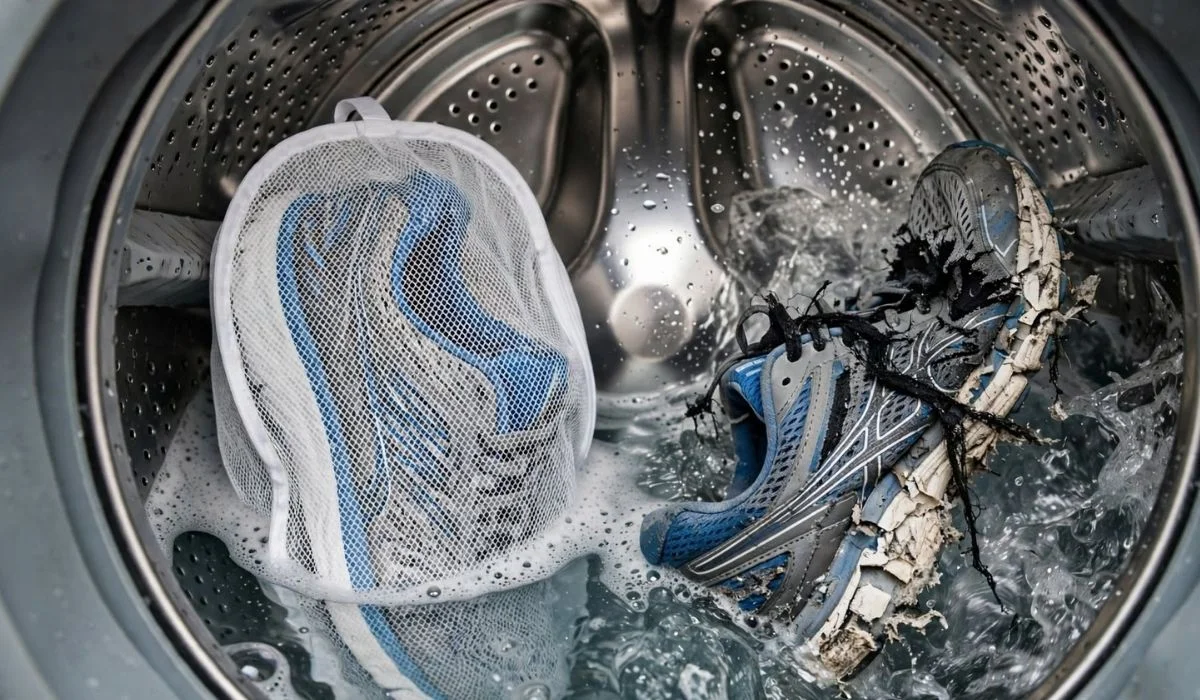
Unlike clothing, shoes have several materials combined into one item. A pair may contain fabric, rubber, foam, stitching, glue, leather-like sections, and decorative details.
The washing cycle affects each component differently.
Gentle Cycle vs. Normal Cycle
A gentle cycle uses less aggressive movement and is generally preferable for washable shoes.
- Gentle/delicate: Best overall choice for suitable fabric shoes
- Normal: May be acceptable for sturdy canvas or synthetic sneakers, depending on the manufacturer’s instructions
- Heavy duty: Usually too aggressive
- Quick wash: Can work for lightly soiled shoes if the cycle uses gentle agitation
- Hand-wash cycle: Excellent option when available
Fact: The gentler the mechanical action, the lower the chance of shoes becoming misshapen during washing.
What Shoes Can Usually Go in a Washing Machine?
Not every pair of shoes belongs in a washing machine. Before selecting a cycle, check the care label or manufacturer’s cleaning instructions.
Generally Suitable Materials
Some shoes are commonly washable when their care instructions permit machine washing.
- Canvas sneakers
- Cotton fabric shoes
- Nylon shoes
- Polyester sneakers
- Some synthetic athletic shoes
- Fabric slip-ons
- Some mesh shoes
Important: “Washable material” does not automatically mean “machine washable.” Construction and manufacturer instructions also matter.
Shoes You Should Usually Keep Out of the Washer
Avoid machine washing shoes made from materials that can be damaged by soaking or aggressive movement.
- Leather
- Suede
- Nubuck
- Shoes with delicate decorations
- Shoes with loose glued components
- Shoes containing electronic components
- Shoes with extensive metal embellishments
- Specialty footwear without machine-wash instructions
Fact: Suede and leather can experience texture, finish, shape, or color changes when exposed to excessive water.
What Water Temperature Should You Use?
Cold water is usually the safest choice for machine-washing washable shoes.
Cold water helps reduce the risk of:
- Color bleeding
- Material shrinkage
- Adhesive deterioration
- Fabric distortion
- Excessive heat exposure
Warm water may be appropriate for certain washable shoes if the manufacturer’s instructions specifically allow it.
Why Hot Water Is Risky
Hot water can be particularly problematic when shoes contain adhesives or heat-sensitive synthetic materials.
Fact: Heat can soften or weaken some shoe adhesives, potentially causing components to separate.
How Much Detergent Should You Use?
More detergent does not necessarily mean cleaner shoes. Excess detergent can remain inside fabric, mesh, and padding.
Use:
- A small amount of mild liquid laundry detergent
- Enough detergent for a small/light load
- A detergent recommended for the shoe material when specified
Avoid using excessive detergent simply because the shoes are dirty.
Should You Use Bleach?
Usually, no.
Bleach can:
- Damage colored fabrics
- Weaken certain fibers
- Affect synthetic materials
- Cause uneven discoloration
- Damage decorative components
For stubborn stains, pretreat the affected area according to the shoe manufacturer’s cleaning instructions rather than automatically adding bleach.
Read Next: Why Shoes Smell | Causes, Prevention & Easy Solutions
What Spin Speed Is Best for Shoes?
A low or medium spin speed is generally preferable.
High-speed spinning can create substantial mechanical stress as the shoes repeatedly hit the drum.
A safer approach is:
- Choose low spin when available
- Use medium spin only when appropriate
- Avoid the highest spin setting
- Remove the shoes promptly after the cycle
Fact: Lower mechanical stress can help shoes retain their original shape.
How to Prepare Shoes Before Washing
Proper preparation can make a bigger difference than simply selecting the correct cycle.
Remove Laces and Insoles
Take out removable shoelaces and insoles before washing whenever the care instructions permit.
This helps you:
- Clean laces separately
- Reach dirt underneath the insoles
- Improve airflow during drying
- Reduce trapped moisture
- Prevent small parts from becoming tangled
Wash removable laces in a mesh laundry bag.
Remove Loose Dirt First
Brush off:
- Mud
- Sand
- Grass
- Pebbles
- Dried dirt
A soft brush or old toothbrush can help clean around the outsole and seams.
Fact: Removing loose dirt before washing reduces the amount of debris entering the washing machine.
Should You Put Shoes in a Laundry Bag?
Yes, a mesh laundry bag can provide an extra layer of protection.
Place the shoes inside the bag and close it securely.
A laundry bag can:
- Reduce direct impact against the drum
- Help contain laces
- Prevent shoes from becoming separated
- Reduce noise
- Protect delicate fabric surfaces
Can You Wash Shoes With Clothes?
It is better to avoid washing shoes with your regular clothing.
Instead, add a few old towels if your machine and shoe-care instructions allow it.
Towels can:
- Cushion the shoes
- Reduce banging
- Help balance the load
- Prevent direct repeated impacts against the drum
Do not overload the washer.
What Cycle to Wash Shoes on Washing Machine:
Step-by-Step: How to Wash Shoes in a Washing Machine
Once you’ve confirmed that the shoes are machine washable, follow a simple process.
Step 1: Check the Care Instructions
Look at the shoe label, manufacturer’s website, or product instructions.
If machine washing is prohibited, clean the shoes by hand instead.
Step 2: Remove Accessories
Take out:
- Laces
- Removable insoles
- Loose inserts
- Any removable decorations
Step 3: Brush Away Dirt
Remove as much dry dirt and mud as possible.
Step 4: Pretreat Stains
Apply a small amount of suitable mild detergent to noticeable stains and gently work it into the fabric.
Step 5: Place Shoes in a Mesh Bag
Put the shoes into a protective laundry bag.
Step 6: Select the Washing Cycle
Choose:
- Delicate
- Gentle
- Hand-wash
Use cold water and a low or medium spin.
Step 7: Add Mild Detergent
Use a modest amount of liquid detergent.
Step 8: Start the Washer
Allow the gentle cycle to complete.
Do not add fabric softener unless the shoe manufacturer specifically recommends it.
Step 9: Remove Shoes Immediately
Take the shoes out once the cycle finishes.
Step 10: Air-Dry Thoroughly
Stuff the shoes loosely with clean white paper or towels to help maintain their shape.
Place them somewhere:
- Cool
- Dry
- Well ventilated
- Away from direct high heat
How to Dry Shoes After Machine Washing
The washing cycle is only half of the process. Drying incorrectly can undo the benefits of gentle washing.
The Safest Drying Method
Air drying is generally the safest approach for washable fabric shoes.
- Remove insoles
- Loosen the tongue
- Open the shoes as much as possible
- Place them in a ventilated area
- Allow plenty of drying time
- Replace insoles only after everything is completely dry
Fact: Trapped moisture inside shoes can contribute to unpleasant odors and microbial growth.
Can You Put Shoes in the Dryer?
Check the manufacturer’s instructions first.
If the shoes are not specifically dryer-safe, avoid using high heat.
High temperatures may:
- Damage adhesives
- Deform foam
- Shrink fabrics
- Alter the shape
- Damage synthetic components
If drying instructions allow a dryer, use the lowest suitable heat setting and follow the manufacturer’s recommendations.
Common Washing Machine Mistakes to Avoid
Even washable shoes can be damaged by poor washing practices.
Mistake 1: Using Hot Water
Hot water may affect colors, adhesives, and materials.
Better: Choose cold water unless the care instructions specify otherwise.
Mistake 2: Choosing Heavy Duty
Heavy-duty agitation is unnecessary for most washable shoes.
Better: Use delicate or gentle.
Mistake 3: Adding Too Much Detergent
Extra detergent can leave residue.
Better: Use a small amount of mild detergent.
Mistake 4: Washing Mud-Covered Shoes Directly
Large amounts of dirt can enter the washer.
Better: Brush off loose dirt first.
Mistake 5: Using High Heat to Dry
High heat can damage shoe construction.
Better: Air-dry whenever possible.
Mistake 6: Overloading the Washer
Too many items can prevent proper cleaning and increase impact.
Better: Keep the load light and balanced.
Mistake 7: Ignoring the Care Label
A shoe that looks washable may still have components that aren’t designed for machine washing.
Better: Follow the manufacturer’s instructions first.
Best Washing Machine Settings for Different Shoe Types
The ideal setting can vary according to construction.
Canvas Shoes
- Cycle: Delicate/gentle
- Water: Cold
- Spin: Low
- Detergent: Mild
- Drying: Air dry
Canvas generally tolerates washing better than delicate leather or suede, but the manufacturer’s instructions still take priority.
Mesh Running Shoes
- Cycle: Gentle
- Water: Cold
- Spin: Low
- Protection: Mesh laundry bag
- Drying: Air dry
Mesh can trap dirt and detergent, so use only a small amount of detergent and rinse thoroughly.
Synthetic Sneakers
- Cycle: Gentle
- Water: Cold
- Spin: Low or medium
- Detergent: Mild
- Drying: Air dry
Check for glued decorative elements before washing.
White Fabric Shoes
White shoes can usually be cleaned with a gentle cycle when machine washing is permitted.
Avoid automatically using chlorine bleach.
Instead:
- Brush away dirt
- Pretreat stains
- Use mild detergent
- Wash with cold water
- Air-dry completely
How Often Should You Machine Wash Shoes?
There is no universal schedule.
Washing too frequently may unnecessarily stress the materials.
Instead, clean shoes when they have:
- Visible dirt
- Persistent stains
- Noticeable odor
- Heavy sweat buildup
- Outdoor grime
For everyday footwear, regular brushing and spot cleaning can reduce the need for full washing.
How to Keep Shoes Cleaner for Longer
A few simple habits can reduce washing frequency.
Quick Maintenance Routine
After wearing shoes:
- Remove loose dirt
- Let them air out
- Keep them dry
- Clean stains promptly
- Store them in a ventilated location
- Avoid wearing fabric shoes in conditions they’re not designed for
Fact: Promptly treating stains is often easier than removing an old, set-in stain after repeated wear.
When Hand Washing Is Better
Machine washing isn’t always the best solution.
Hand washing is preferable when shoes have:
- Delicate stitching
- Fragile decorations
- Sensitive materials
- Loose components
- Manufacturer instructions requiring hand washing
Use a soft brush, mild detergent, and cool water, then rinse carefully and air-dry.
A Simple Shoe-Washing Checklist
Before pressing the start button, check this list:
- Manufacturer permits machine washing
- Loose dirt has been removed
- Laces have been removed
- Insoles have been removed if appropriate
- Shoes are inside a mesh laundry bag
- Cold water selected
- Gentle/delicate cycle selected
- Low or medium spin selected
- Mild detergent added
- Washer is not overloaded
- Air drying is planned
The Bottom Line
If you’re wondering what cycle to wash shoes on a washing machine, the safest general answer is a gentle or delicate cycle with cold water and low spin—provided the shoes are specifically suitable for machine washing.
Avoid aggressive cycles and high temperatures, and focus just as much on preparation and drying as the wash itself. When in doubt, the shoe manufacturer’s care instructions should always take priority over general washing advice.
FAQs
Can I wash shoes on a normal cycle?
Some sturdy washable shoes can tolerate a normal cycle, but a gentle or delicate cycle is generally safer because it reduces agitation and impact.
What temperature should I wash shoes in?
Cold water is usually the safest option for machine-washable shoes.
Can I wash sneakers in the washing machine?
Many fabric and synthetic sneakers can be machine washed, but always check their care instructions first.
Should I use delicate cycle for shoes?
Yes. A delicate or gentle cycle is generally a good choice because it uses less aggressive mechanical action.
Can I put shoes in the washing machine with towels?
A few old towels can help cushion shoes and reduce banging, provided the shoe and washer instructions allow it. Avoid overloading the machine.
Can I use regular laundry detergent on shoes?
A small amount of mild liquid laundry detergent is generally suitable for washable fabric shoes. Avoid excessive detergent.
Should I wash shoes with hot or cold water?
Cold water is generally the better choice because it reduces the risk of material, color, and adhesive damage.
Can I put washed shoes in the dryer?
Only if the manufacturer says they are dryer-safe. Otherwise, air drying is the safer option.
How long do shoes take to air dry?
Drying time varies with material, humidity, airflow, and how wet the shoes are. Allow them to dry completely before wearing them again.
Why do shoes smell after washing?
Odor can occur when moisture remains trapped inside padding or insoles. Remove insoles when possible and allow the shoes to dry completely in a well-ventilated area.