How to Disinfect Shoes Before Entering House | Easy Steps for a Germ-Free Home
Shoes carry far more than just dirt from outside. They can bring in bacteria, viruses, allergens, pesticides, and even fungal spores into your home environment.
That’s why learning how to disinfect shoes before entering house is an important hygiene habit for maintaining a clean, healthy living space.
Why You Should Disinfect Shoes Before Entering the House:
Every time you walk outside, your shoes come into contact with:
- Bacteria from public surfaces
- Virus particles from shared spaces
- Dirt, dust, and pollutants
- Animal waste residues
- Fungal spores from soil or damp areas
When brought indoors, these contaminants spread across:
- Floors
- Carpets
- Furniture areas where feet rest
- Children’s play zones
Maintaining shoe hygiene reduces indoor contamination significantly.
What Can Be on Your Shoes?
Research shows shoes can carry microorganisms such as:
- E. coli bacteria
- Staphylococcus species
- Fungal spores
- Viral particles (in public environments)
This is why many hygiene experts recommend a no-outdoor-shoes indoor policy or regular disinfection routines.
According to public health hygiene principles supported by the Centers for Disease Control and Prevention, maintaining clean footwear reduces the risk of transferring harmful microorganisms into living spaces.
Read More: How to Clean Shoes with Baking Soda
Step-by-Step Guide: How to Disinfect Shoes Before Entering House
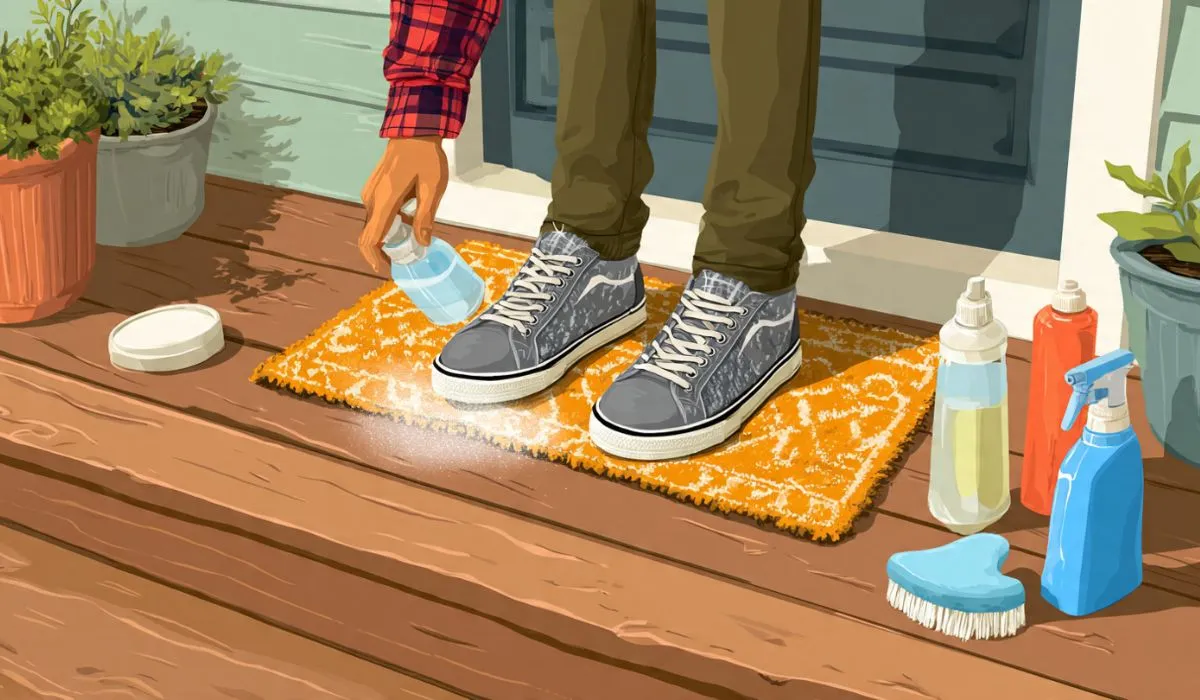
Step 1: Set Up a Shoe Cleaning Zone Outside the Home
Create a small area near your entrance:
- Shoe mat or tray
- Disinfection spray station
- Brush or wipes
Why this matters:
- Prevents indoor contamination
- Encourages habit formation
- Keeps dirt contained in one area
Step 2: Remove Visible Dirt First
Before disinfecting:
- Tap shoes together to remove loose dirt
- Use a dry brush or cloth
- Focus on soles and grooves
Important:
Disinfection works best when surfaces are clean first.
Step 3: Use a Disinfectant Spray
Choose an effective disinfectant such as:
- Alcohol-based spray (70% isopropyl alcohol)
- Hydrogen peroxide solution (mild)
- Household disinfectant spray
How to apply:
- Spray evenly on shoe soles
- Lightly spray outer surface
- Avoid soaking fabric or leather
Let it sit for 1–2 minutes.
Step 4: Wipe Shoes Thoroughly
After spraying:
- Use a clean microfiber cloth
- Wipe soles and outer surfaces
- Pay attention to edges and grooves
This removes both dirt and disinfectant residue.
Step 5: Disinfect Shoe Soles Deeply
Soles carry the most germs.
Method:
- Spray disinfectant generously on soles
- Scrub with a brush
- Wipe clean with cloth
Tip:
Use an old toothbrush for deep grooves.
Step 6: Optional UV or Sunlight Exposure
Sunlight is a natural disinfectant.
- Place shoes in sunlight for 10–30 minutes
- UV rays help reduce microbial presence
Alternatively, UV shoe sanitizing boxes can be used.
Step 7: Dry Shoes Before Indoor Use
Moisture can encourage microbial growth.
- Allow shoes to air dry
- Ensure no dampness remains
- Never bring wet shoes indoors
Step 8: Store Shoes in Designated Area
After disinfection:
- Store shoes in rack or cabinet near entrance
- Avoid indoor floor storage
- Keep separation between outdoor and indoor footwear
Effective Shoe Disinfection Methods Compared:
1. Alcohol Spray (Most Effective)
- Fast acting
- Kills bacteria and viruses
- Easy to use
2. Soap and Water Cleaning
- Good for visible dirt
- Less effective for deep disinfection
3. Hydrogen Peroxide Solution
- Antibacterial and antifungal
- Suitable for light use
4. UV Shoe Sanitizers
- High-tech solution
- Kills germs using UV light
- Convenient but more expensive
How Often Should You Disinfect Shoes?
- Daily wear shoes: every time before entering home
- Outdoor sports shoes: after each use
- Occasional shoes: before storage and use
Consistency is key for hygiene.
Expert Hygiene Insight:
Modern hygiene practices emphasize environmental cleanliness as a key factor in reducing microbial exposure at home. Footwear is one of the most overlooked carriers of contaminants.
According to hygiene research and infection control practices supported by the World Health Organization, maintaining cleanliness of frequently used personal items—such as shoes—helps reduce environmental contamination and improves overall household hygiene standards.
This is especially important in homes with children, elderly individuals, or people with weakened immune systems.
Common Mistakes to Avoid:
- Skipping sole cleaning (most contaminated area)
- Using too much liquid disinfectant
- Bringing wet shoes indoors
- Not cleaning brushes or cloths used
- Ignoring regular maintenance
Effective Tips for Better Shoe Hygiene:
- Keep indoor slippers separate from outdoor shoes
- Use a shoe mat outside the door
- Rotate shoes to allow drying time
- Clean shoes weekly for deeper hygiene
- Use antibacterial shoe sprays regularly
- Store shoes in ventilated cabinets
Benefits of Disinfecting Shoes Before Entering Home:
- Reduces household bacteria and germs
- Improves indoor air hygiene
- Prevents spread of infections
- Keeps floors cleaner for longer
- Enhances family health safety
- Reduces odor and dirt buildup
When Extra Disinfection Is Necessary:
You should be more careful when:
- Returning from hospitals or crowded places
- Walking through muddy or polluted areas
- During flu or virus outbreaks
- After outdoor sports or travel
FAQs:
1. Why should I disinfect shoes before entering house?
Because shoes carry bacteria, dirt, and contaminants from outside.
2. What is the best disinfectant for shoes?
Alcohol-based sprays (70%) are most effective and fast-acting.
3. Can I use bleach on shoes?
No, bleach can damage most shoe materials.
4. How often should I clean shoe soles?
Ideally after every outdoor use.
5. Does sunlight disinfect shoes?
Yes, UV rays help reduce germs naturally.
6. Can germs from shoes spread inside home?
Yes, especially on floors and carpets.