How to Clean Shoes with Baking Soda and Vinegar | Simple DIY Stain Remover
Keeping shoes clean is not just about appearance—it is also about hygiene, comfort, and durability. Over time, shoes collect dirt, sweat, bacteria, and odor that regular wiping cannot fully remove.
One of the most powerful natural cleaning combinations you can use at home is baking soda and vinegar. Together, they create a deep-cleaning reaction that helps remove stains, neutralize odor, and refresh your shoes effectively.
Why Use Baking Soda and Vinegar for Shoe Cleaning?
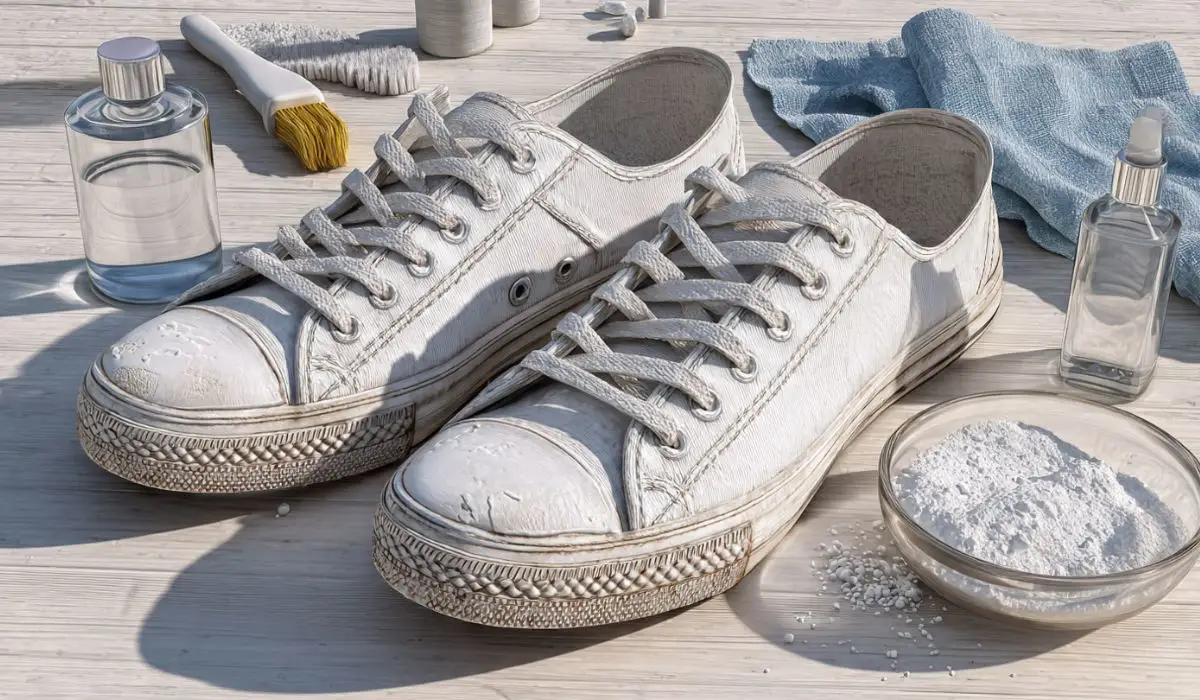
Baking soda and vinegar work together because they have different but complementary cleaning properties:
Baking Soda (Sodium Bicarbonate)
- Neutralizes bad odor
- Absorbs moisture
- Gently scrubs dirt and stains
Vinegar (Acetic Acid)
- Kills bacteria and germs
- Breaks down tough stains
- Removes odor-causing residues
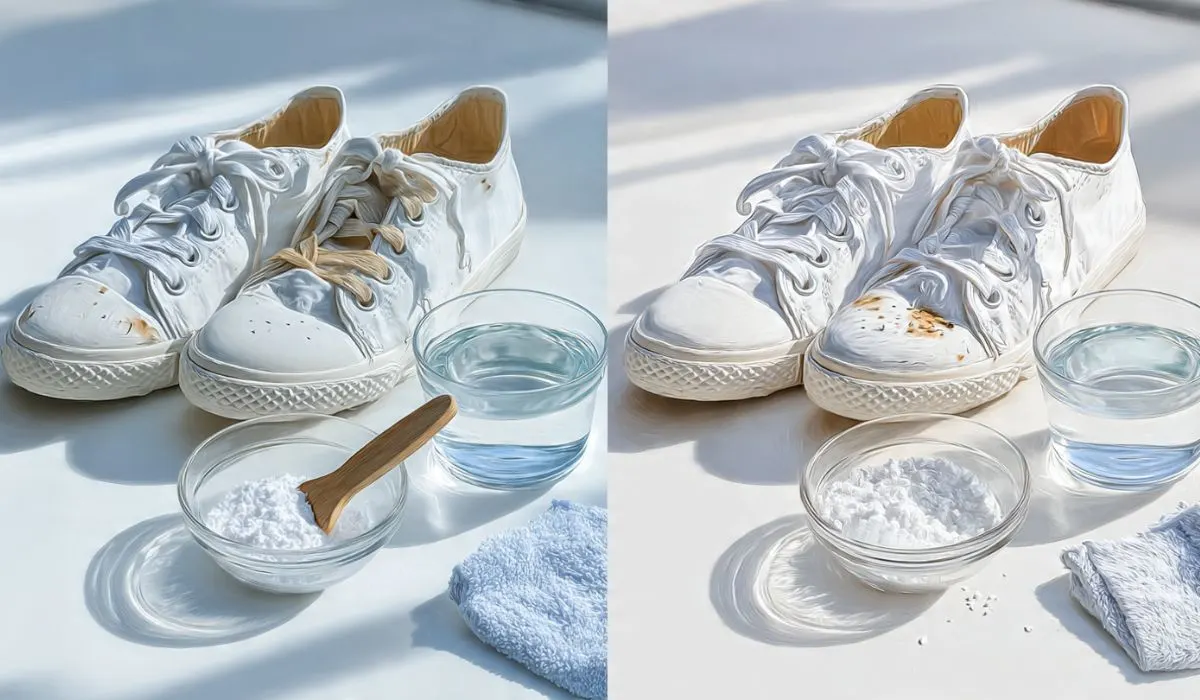
When combined, they create a foaming reaction that helps lift dirt from shoe fibers.
What Types of Shoes Can Be Cleaned with This Method?
This method works best on:
- Canvas shoes
- Fabric sneakers
- Running shoes
- Mesh shoes
- Rubber soles
Use caution with:
- Leather shoes (avoid heavy vinegar exposure)
- Suede shoes (not recommended unless very diluted and controlled)
How to Clean Shoes with Baking Soda and Vinegar | Simple DIY Stain Remover:
Step 1: Remove Laces and Insoles
Start by preparing your shoes:
- Take out shoelaces
- Remove insoles (if removable)
Why this matters:
- Allows deeper cleaning inside shoes
- Prevents hidden odor buildup
- Ensures even cleaning
Step 2: Dry Brush the Shoes
Before applying any liquid:
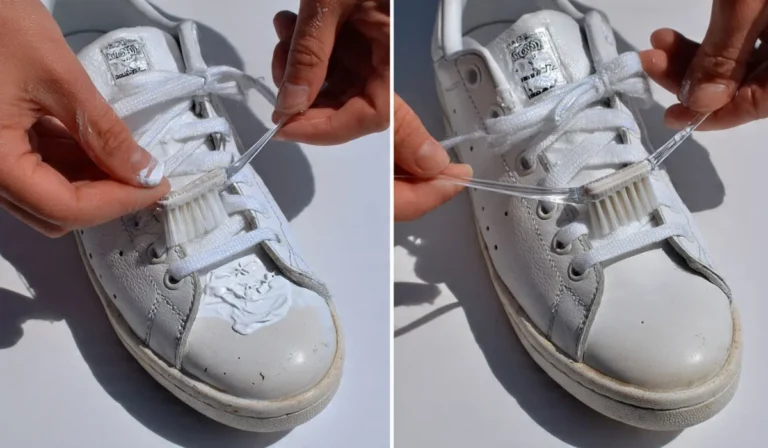
- Use a soft brush or old toothbrush
- Remove dust, mud, and surface dirt
- Focus on soles and corners
This helps improve cleaning effectiveness.
Read More: How to Clean Shoes
Step 3: Prepare Baking Soda Paste
Mix a simple paste:
- 1–2 tablespoons baking soda
- A small amount of water
Optional:
For extra cleaning power, you can apply paste directly to stains.
Step 4: Apply Baking Soda Inside Shoes
- Spread baking soda paste inside shoes
- Focus on heel and toe areas
- Lightly scrub if needed
Let it sit for a few minutes.
Step 5: Prepare Vinegar Spray Solution
Mix in a spray bottle:
- 1 part white vinegar
- 1 part water
Important:
Do not use undiluted vinegar on delicate shoes.
Step 6: Spray Vinegar Over Baking Soda
Now comes the cleaning reaction:
- Spray vinegar solution over baking soda
- You will see mild foaming action
- Let it sit for 5–10 minutes
What happens:
- Dirt loosens
- Odor molecules break down
- Bacteria is reduced
Step 7: Scrub Gently
Use a soft brush:
- Scrub inside shoes gently
- Focus on stained areas
- Clean soles thoroughly
Avoid harsh scrubbing to protect materials.
Step 8: Wipe and Rinse
After cleaning:
- Use a damp cloth to wipe residue
- Remove leftover baking soda and vinegar
- Repeat if necessary
Step 9: Clean Insoles and Laces Separately
Insoles:
- Soak in vinegar-water mix
- Scrub gently
- Air dry completely
Laces:
- Soak in warm soapy water
- Rinse and dry
Step 10: Air Dry Properly
Drying is critical:
- Place shoes in a ventilated area
- Avoid direct sunlight for long hours
- Ensure complete dryness before wearing
Pro Tip:
Stuff shoes with paper towels to maintain shape.
Step 11: Final Touch (Odor Control)
After drying:
- Sprinkle a small amount of baking soda inside overnight
- Shake out before wearing
This keeps shoes fresh longer.
Benefits of Using Baking Soda and Vinegar for Shoes:
1. Deep Cleaning Power
Removes dirt, stains, and odor together.
2. Natural and Chemical-Free
Safe alternative to harsh cleaners.
3. Odor Elimination
Targets bacteria that cause bad smell.
4. Affordable Solution
Uses common household ingredients.
5. Effective for Most Shoes
Works well on fabric and canvas shoes.
Expert Insight on Shoe Hygiene:
Footwear hygiene plays a major role in preventing odor, bacteria buildup, and fungal infections. Shoes often trap moisture and microorganisms after daily use.
According to hygiene and infection prevention guidelines supported by the Centers for Disease Control and Prevention, controlling moisture and microbial buildup in personal items like footwear is important for reducing the risk of skin-related infections and odor problems.
Natural cleaning methods like baking soda and vinegar are widely used in household hygiene because they are effective in reducing microbial growth without harsh chemicals.
Effective Tips for Best Results:
- Clean shoes regularly instead of waiting for heavy dirt buildup
- Always remove laces and insoles before cleaning
- Use diluted vinegar to avoid material damage
- Dry shoes completely before use
- Use baking soda overnight for odor prevention
- Rotate shoes to reduce moisture buildup
Common Mistakes to Avoid:
- Using undiluted vinegar on delicate materials
- Soaking leather or suede shoes
- Scrubbing too hard and damaging fabric
- Wearing shoes before fully drying
- Ignoring insoles (major odor source)
When This Method Works Best:
This cleaning method is ideal for:
- Smelly sneakers
- Mud-stained canvas shoes
- Gym shoes with sweat buildup
- Everyday casual footwear
For heavy fungal infections or deep leather stains, professional cleaning may be required.
How Often Should You Clean Shoes This Way?
- Light use shoes: once every 2–3 weeks
- Gym shoes: weekly or after heavy use
- Odor-prone shoes: as needed
FAQs:
1. Can baking soda and vinegar damage shoes?
Not if used properly and diluted correctly.
2. Does this method remove bad shoe odor?
Yes, it neutralizes odor-causing bacteria.
3. Can I use this on leather shoes?
Use caution—only lightly damp cloth cleaning is recommended.
4. How long should I leave baking soda and vinegar on shoes?
About 5–10 minutes after reaction is enough.
5. Is this method better than washing machine?
Yes for delicate shoes, as it reduces damage risk.
6. Can I use this method every week?
Yes, for frequently used sneakers.
7. Does vinegar kill bacteria in shoes?
Yes, vinegar has natural antibacterial properties.
Final Thoughts:
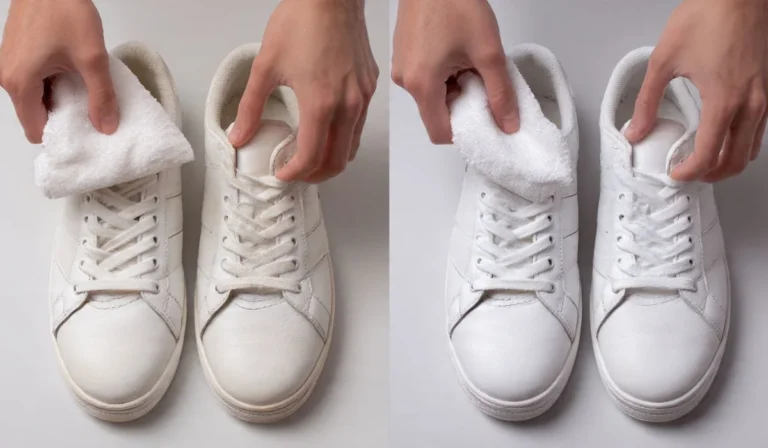
Learning how to clean shoes with baking soda and vinegar is one of the most effective natural cleaning methods for maintaining fresh, hygienic footwear. It combines odor removal, stain lifting, and antibacterial action in a simple, affordable process.
By following this step-by-step guide, you can restore your shoes’ freshness, extend their lifespan, and avoid harsh chemical cleaners.
Regular care, proper drying, and simple natural ingredients are all you need to keep your shoes clean, comfortable, and odor-free.