Synthetic Sole vs Rubber Sole | Grip, Flexibility, and Everyday Footwear?
Choosing the right shoe is about more than the upper material, cushioning, or appearance. The sole plays a major role in how a shoe feels, performs, and holds up over time. Two common options are synthetic soles and rubber soles, but they behave quite differently.
If you are comparing synthetic sole vs rubber sole, the better choice depends on where you plan to wear the shoes, how much traction you need, the climate, and how important weight and flexibility are to you. Synthetic soles can be lightweight and affordable, while rubber soles are widely valued for grip, abrasion resistance, and durability.
Understanding these differences can make it much easier to choose footwear for walking, work, casual wear, sports, hiking, or everyday use.
Synthetic Sole vs Rubber Sole at a Glance
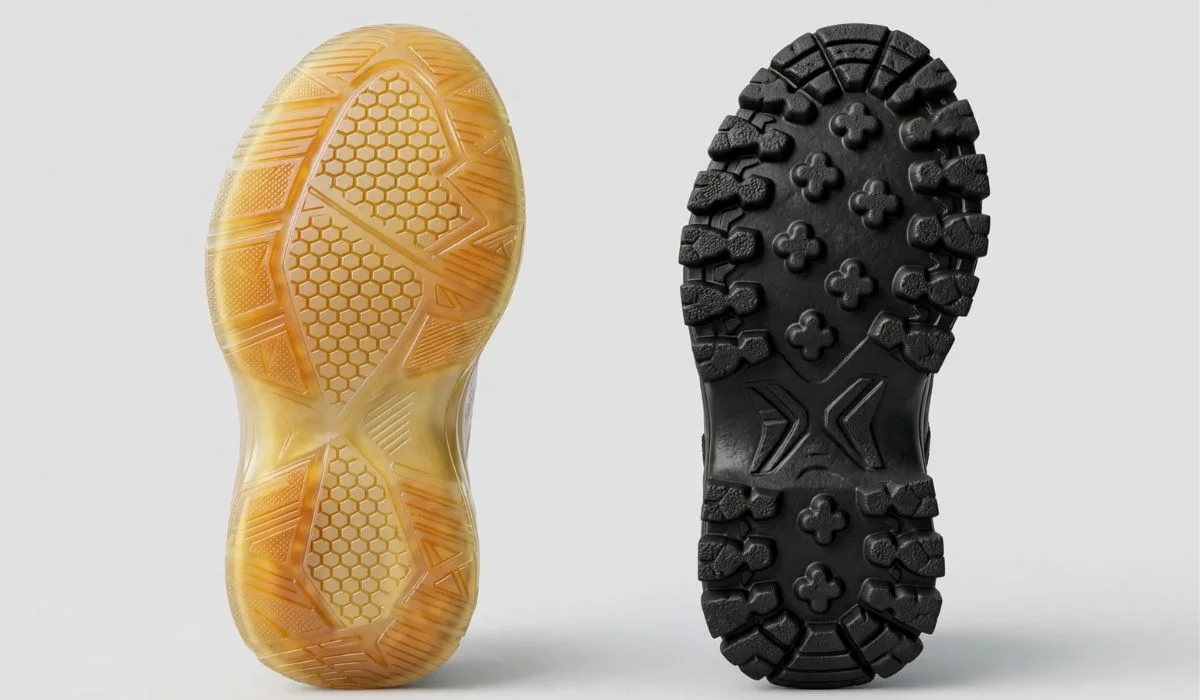
Synthetic soles are made from manufactured materials rather than natural rubber. Common materials include EVA, polyurethane (PU), PVC, and thermoplastic rubber or similar compounds. Their characteristics vary significantly depending on the formulation.
Rubber soles are made from natural rubber, synthetic rubber, or a combination of rubber compounds. They are especially known for traction and resistance to wear.
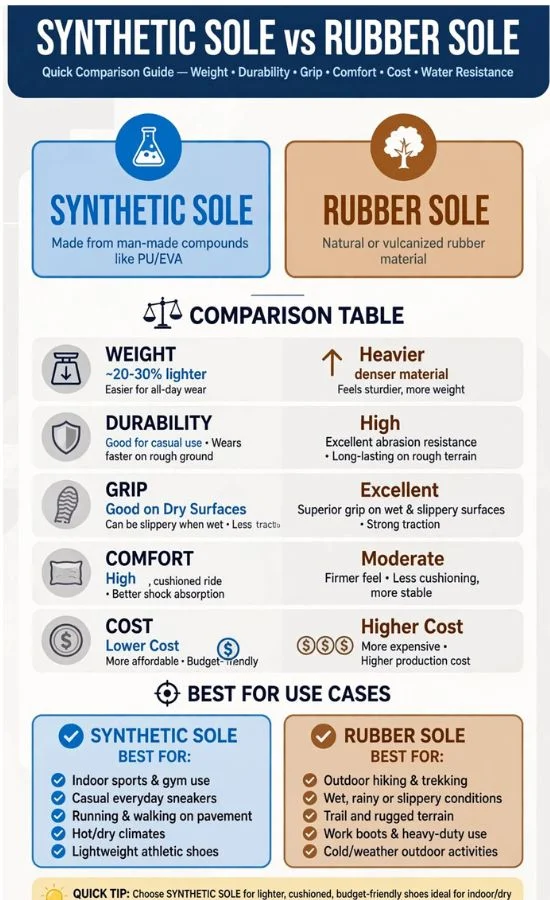
| Feature | Synthetic Sole | Rubber Sole |
|---|---|---|
| Weight | Often lightweight | Usually heavier |
| Grip | Moderate to excellent, depending on material | Generally excellent |
| Durability | Depends heavily on material | Usually very good |
| Flexibility | Can be highly flexible | Moderate to flexible |
| Water resistance | Often good | Excellent |
| Abrasion resistance | Varies | Generally high |
| Shock absorption | Excellent with EVA/PU | Moderate unless specially designed |
| Cost | Often more affordable | Usually moderate to higher |
| Best use | Casual, walking, lightweight footwear | Work, outdoor, wet surfaces, active use |
The important point is that “synthetic” describes a broad category. An EVA sole and a PU sole can feel completely different, so the exact material matters.
What Is a Synthetic Shoe Sole?
A synthetic shoe sole is manufactured from man-made polymers or compounds. Unlike traditional natural rubber, these materials are engineered to provide particular characteristics such as low weight, cushioning, flexibility, or resistance to moisture.
Common Synthetic Sole Materials
EVA (ethylene-vinyl acetate) is popular in athletic and casual footwear because it is lightweight and provides good cushioning. It is commonly used in midsoles and some complete outsoles.
Polyurethane (PU) is valued for its combination of durability, cushioning, and resistance to oils and abrasion. It is frequently found in work shoes and occupational footwear.
PVC (polyvinyl chloride) can provide good resistance to water and chemicals and is often used in economical footwear and certain occupational applications.
TPR (thermoplastic rubber) combines characteristics associated with plastics and rubber. It can provide useful flexibility and traction while remaining relatively easy to manufacture.
Because synthetic soles cover several materials, you should check the manufacturer’s specifications rather than assuming every synthetic sole has the same performance.
Read Next: Eva Sole Material Is Good or Bad | Need to Know Before Buying
What Is a Rubber Sole?
A rubber sole uses rubber as the primary outsole material. Rubber may be natural, synthetic, or a blend of different rubber compounds.
Rubber is particularly useful where traction and resistance to repeated contact with the ground are important. It is commonly used in sneakers, work boots, hiking footwear, casual shoes, and court shoes.
Natural Rubber and Synthetic Rubber
Natural rubber comes from latex harvested from rubber trees and has useful elasticity and flexibility.
Synthetic rubber is manufactured from chemical feedstocks and can be formulated for specific properties such as abrasion resistance, oil resistance, temperature performance, or grip.
Many modern shoe soles use specially formulated rubber compounds rather than relying exclusively on natural rubber.
Synthetic Sole vs Rubber Sole for Grip
Grip is one of the biggest differences to consider.
Rubber generally provides dependable traction on many hard surfaces because its properties allow it to maintain good contact with the ground. Shoe manufacturers can further modify rubber compounds and tread patterns to improve traction.
Synthetic soles can also have excellent grip. However, performance varies dramatically by material.
An EVA outsole designed primarily for cushioning may not provide the same traction as a purpose-built rubber outsole. Conversely, a high-quality synthetic compound with a carefully designed tread can perform very well.
Which Sole Is Better on Wet Floors?
Rubber is often the safer general choice when wet-surface traction is important, but no sole automatically prevents slipping.
The tread pattern, surface condition, contamination, temperature, and compound all affect traction. Smooth rubber can still become slippery on wet tile, while an appropriately designed outsole may perform better.
For bathrooms, kitchens, rainy conditions, or outdoor environments, look for footwear specifically marketed for slip resistance rather than relying only on the word “rubber.”
Which Sole Is More Durable?
Rubber usually has an advantage when shoes are exposed to substantial abrasion.
Walking repeatedly on pavement, concrete, rough trails, or industrial flooring can gradually wear down an outsole. Rubber compounds are often designed to withstand this type of repeated contact.
Synthetic soles can also be durable, particularly PU and certain engineered compounds. However, durability varies substantially between materials.
EVA Durability
EVA is lightweight and comfortable, but repeated compression can eventually reduce its cushioning and alter its shape. This is one reason many athletic shoes combine lightweight foam with a more abrasion-resistant rubber outsole.
PU Durability
PU can offer a useful balance between cushioning and durability. However, certain PU formulations can experience hydrolysis, a chemical degradation process associated with moisture and environmental conditions.
This means material quality, storage, and construction all matter.
Which Is More Comfortable?
Comfort depends on more than the outsole.
A synthetic sole made from EVA or another cushioning foam may feel softer and lighter than a traditional rubber outsole. This can make it attractive for walking and everyday footwear.
Rubber, meanwhile, can provide a stable base and good ground contact. A shoe with a rubber outsole can still be extremely comfortable when it has a well-designed midsole and footbed.
For Long Hours of Walking
If you spend several hours walking, look beyond the outsole material.
Consider:
- Midsole cushioning
- Arch and heel support
- Shoe flexibility
- Weight
- Foot width
- Toe-box space
- Overall fit
- Outsole traction
A lightweight synthetic construction can reduce the feeling of heaviness, while rubber may provide better long-term outsole wear.
Synthetic Sole vs Rubber Sole for Weight
Weight can influence how a shoe feels during long periods of movement.
Many synthetic materials are significantly lighter than rubber. EVA is a particularly common choice when manufacturers want to reduce shoe weight without eliminating cushioning.
Rubber is denser, so a thick rubber outsole can add noticeable weight.
For running, casual walking, travel, and lightweight everyday shoes, a synthetic construction may be attractive.
When Extra Weight Is Useful
A heavier outsole is not necessarily a disadvantage.
Work boots and outdoor footwear may benefit from a substantial rubber outsole because durability, stability, and traction can be more important than minimizing weight.
The best balance depends on the activity.
Which Sole Offers Better Flexibility?
Flexibility varies according to the specific compound and sole design.
EVA and some thermoplastic materials can be highly flexible. Rubber can also be flexible, especially when used in thin sections or with strategically placed grooves.
A shoe designed for natural foot movement may use a flexible outsole regardless of whether it is synthetic or rubber.
Try bending the shoe at the forefoot rather than judging flexibility solely from the material label.
Water Resistance: Synthetic vs Rubber
Both options can perform well in wet conditions, but their behavior depends on construction.
Rubber itself is highly resistant to water, which is why rubber is commonly used in rain boots and wet-environment footwear.
Many synthetic materials also resist water, but the entire shoe can still allow water through the upper, seams, tongue, or openings.
Does a Synthetic Sole Absorb Water?
Some synthetic sole materials have low water absorption, but this does not mean the complete shoe is waterproof.
For wet-weather footwear, examine the upper and construction as well as the outsole. A waterproof membrane, sealed construction, or water-resistant upper may be more important than whether the outsole is synthetic or rubber.
Synthetic Sole vs Rubber Sole for Work Shoes
Work footwear often requires a combination of durability, traction, stability, and resistance to workplace hazards.
Rubber outsoles are popular for demanding work environments because many rubber compounds offer good abrasion resistance and traction.
Synthetic materials such as PU can also be useful because they can provide cushioning and resistance to certain substances.
Choosing Safety Footwear
For industrial or workplace use, choose footwear based on the required safety standards and the hazards of the job.
If the workplace requires slip resistance, electrical protection, puncture resistance, chemical resistance, or protective toe caps, the outsole material alone does not determine whether a shoe meets those requirements.
Always check the manufacturer’s certification and safety specifications.
Synthetic Sole vs Rubber Sole for Running
Running shoes commonly use a combination of materials rather than choosing one material for the entire sole.
A lightweight foam such as EVA or another modern foam may be used for cushioning, while rubber is placed in high-wear areas of the outsole.
This construction reduces unnecessary weight while protecting areas that experience frequent ground contact.
Why Running Shoes Use Multiple Materials
A running shoe has different performance requirements in different parts of the sole.
The midsole needs to provide cushioning and energy management, while the outsole needs to withstand repeated contact with pavement or other running surfaces.
Using separate materials allows manufacturers to balance comfort, weight, durability, and traction.
Which Sole Is Better for Hiking?
For hiking, rubber often has an advantage because trails can include rocks, dirt, roots, mud, and wet surfaces.
A hiking shoe needs more than a durable material, though. Lug depth, tread pattern, heel structure, flexibility, and upper protection all influence performance.
A lightweight synthetic sole can work well for easy trails, while a robust rubber outsole may be more appropriate for rugged terrain.
Look at the Tread Pattern
Deep, strategically placed lugs can improve traction on loose surfaces.
For hiking footwear, examine the outsole pattern instead of simply asking whether the sole is rubber or synthetic.
Synthetic Sole vs Rubber Sole for Casual Shoes
For everyday casual footwear, either option can work well.
Synthetic soles are often appealing because they can keep shoes light and provide a comfortable walking experience. They are also commonly available at lower price points.
Rubber soles are a good choice when you want stronger traction and resistance to everyday abrasion.
For occasional wear, a lightweight synthetic sole may be more than sufficient. For daily walking on pavement, a durable rubber outsole may offer better longevity.
Cost and Value
Synthetic soles are not automatically cheaper, but many synthetic materials can be produced economically and molded efficiently.
Rubber soles may cost more depending on the compound, construction method, and amount of material used.
The lowest purchase price does not necessarily mean the best value.
A $30 shoe that wears out quickly may cost more over time than a $60 shoe that remains functional for much longer.
Consider Cost Per Wear
Instead of looking only at the original price, consider:
Cost per wear = purchase price ÷ number of useful wears
For example, a $50 pair worn 100 times costs about $0.50 per wear. A $30 pair worn only 30 times costs about $1 per wear.
This is a simple way to think about durability and value.
Environmental Considerations
Neither category should automatically be considered environmentally superior.
Synthetic soles are commonly made from petroleum-derived polymers, although some manufacturers now incorporate recycled or bio-based materials.
Rubber has both natural and synthetic forms. Natural rubber is renewable when responsibly sourced, but rubber production still has environmental impacts related to farming, processing, transportation, and manufacturing.
The overall environmental footprint also depends on how long the shoe lasts, how it is manufactured, and what happens to it after disposal.
Does a Longer-Lasting Sole Matter?
Yes. Extending the useful life of footwear can reduce the need to manufacture and replace another pair.
Choosing a durable shoe that suits your activity and caring for it properly can therefore be more meaningful than choosing based solely on whether the sole is labeled synthetic or rubber.
How to Choose Between Synthetic and Rubber Soles
There is no universal winner in the synthetic sole vs rubber sole debate.
Use these practical guidelines:
- Choose synthetic when low weight is a major priority.
- Choose rubber when strong traction is important.
- Choose EVA-based footwear when lightweight cushioning is desirable.
- Choose rubber outsoles for frequent pavement or rough-surface use.
- Consider PU when you want a balance of cushioning and durability.
- For wet environments, look specifically for tested slip resistance.
- For hiking, prioritize tread design and terrain suitability.
- For work shoes, check the required safety ratings.
- For running, consider shoes that combine foam cushioning with rubber in high-wear areas.
- For everyday use, prioritize fit, comfort, and expected durability.
A Simple Buying Checklist
Before purchasing shoes, inspect more than the sole label.
Check These Five Things
1. Sole construction: Determine whether the shoe uses EVA, PU, rubber, TPR, PVC, or another compound.
2. Tread: Look at the grooves and patterns underneath the shoe.
3. Flex point: Bend the shoe gently and see whether it flexes where your foot naturally bends.
4. Weight: Compare similar shoes if you prefer lightweight footwear.
5. Intended use: Match the outsole to walking, running, work, hiking, casual wear, or another activity.
The Bottom Line
When comparing synthetic sole vs rubber sole, rubber is usually the stronger choice for traction, abrasion resistance, and demanding outdoor or work environments. Synthetic soles can be the better option when low weight, cushioning, flexibility, or affordability is the priority.
However, the material name alone does not tell the entire story. EVA, PU, PVC, TPR, natural rubber, and synthetic rubber each have different characteristics. Sole thickness, tread design, formulation, and shoe construction can significantly change performance.
For most buyers, the smartest approach is to choose the sole based on the activity rather than automatically assuming one material is superior.
FAQs About Synthetic Sole vs Rubber Sole
Is a synthetic sole better than a rubber sole?
Not necessarily. Synthetic soles can be lighter and more cushioned, while rubber soles often provide better traction and abrasion resistance. The better option depends on the intended use.
Are synthetic soles durable?
Some synthetic soles are highly durable. PU and certain engineered compounds can offer good longevity, while softer materials such as EVA may compress or wear differently over time.
Are rubber soles good for everyday shoes?
Yes. Rubber soles can be excellent for everyday shoes because they generally offer good traction and resistance to pavement wear.
Which sole is lighter, synthetic or rubber?
Many synthetic materials are lighter than rubber. EVA is particularly lightweight, which is why it is widely used in athletic and casual footwear.
Which sole is best for walking?
There is no single best sole for every walker. A lightweight, cushioned synthetic sole can be comfortable for everyday walking, while rubber can provide useful durability and traction on pavement.
Are rubber soles slippery?
Rubber is not automatically slip-proof. Traction depends on the rubber compound, tread pattern, surface, moisture, and contaminants. Look for footwear specifically tested for slip resistance when that feature is important.
Can synthetic soles get wet?
Yes, although many synthetic materials have good water resistance. However, the waterproofness of a complete shoe also depends on its upper, seams, openings, and construction.
Which lasts longer, rubber or synthetic soles?
Rubber often performs very well under heavy abrasion, but some synthetic compounds can also be highly durable. Actual lifespan depends on material quality, construction, frequency of use, walking surface, and maintenance.
Are rubber soles heavier?
Generally, rubber is denser than lightweight synthetic materials, so a thick rubber outsole can add weight. However, shoe construction varies considerably.
Is EVA a synthetic sole?
Yes. EVA is a synthetic polymer commonly used in footwear for cushioning and lightweight construction.
Can a shoe have both synthetic and rubber soles?
Absolutely. Many modern shoes combine materials. For example, a shoe may use a lightweight foam midsole and rubber sections on the outsole where greater durability and traction are needed.
Which is better for hiking, rubber or synthetic?
Rubber is often preferred for rugged hiking because it can provide durable traction and abrasion resistance. However, tread design, lug depth, shoe construction, and terrain are equally important.
Which sole is best for rainy weather?
Rubber offers strong water resistance, but wet-weather safety depends heavily on tread and slip resistance. A rubber sole with poor tread can still slip on certain wet surfaces.
Is synthetic sole good for running?
Yes. Synthetic foams such as EVA and newer foam compounds are widely used in running footwear because they can provide cushioning without adding excessive weight. Many running shoes also add rubber in high-wear areas.