How To Wash Snow Boots In Washing Machine | A Complete Guide to Cleaning
Snow boots can quickly collect mud, salt, slush, grass, and other winter grime. While washing them in a washing machine may seem like the easiest solution, not every pair of snow boots is machine washable. The materials, construction, insulation, waterproof membranes, adhesives, and decorative details can all affect whether they can safely go into a washer.
Before you start, always check the care label or manufacturer’s cleaning instructions. If machine washing is allowed, using a gentle cycle, cold water, mild detergent, and proper drying technique can help clean your snow boots without unnecessarily damaging them.
Can You Wash Snow Boots in a Washing Machine?
Some snow boots can be washed in a washing machine, but others should only be cleaned by hand. Lightweight fabric snow boots may tolerate machine washing better than boots made from leather, suede, rubber, or specialized waterproof materials.
Check the Care Label First
Look inside the boot or check the manufacturer’s instructions for terms such as:
- Machine washable
- Wash on gentle cycle
- Cold water only
- Hand wash
- Do not machine wash
- Do not tumble dry
If the manufacturer specifically says not to machine wash the boots, follow that instruction even if the boots appear sturdy.
Which Snow Boots Are Usually Safer to Machine Wash?
The material and construction are more important than the boot’s appearance.
Fabric and Synthetic Snow Boots
Snow boots made primarily from washable textile or synthetic materials may be suitable for machine washing if the manufacturer allows it. These boots often have removable liners or insulation that can make cleaning easier.
However, waterproof coatings and glued components may still require special care.
Boots That Need Extra Caution
Avoid putting boots in a washing machine without checking instructions if they contain:
- Genuine leather
- Suede
- Nubuck
- Sheepskin
- Delicate insulation
- Decorative hardware
- Fragile stitching
- Specialized waterproof membranes
- Components attached primarily with adhesive
Machine agitation and water exposure can damage materials that are not designed for this type of cleaning.
What You Need Before Washing Snow Boots:

Preparing the boots properly can make the washing process safer and more effective.
Basic Cleaning Supplies
You may need:
- Mild liquid laundry detergent
- Soft brush
- Clean cloth
- Mesh laundry bag or pillowcase
- Old towels
- Newspaper or clean paper for drying
- Washing machine with a gentle cycle
Avoid using bleach or harsh cleaning chemicals unless the manufacturer specifically recommends them.
Prepare the Snow Boots Before Putting Them in the Washer
Do not immediately throw muddy boots into the washing machine.
Remove Loose Dirt and Mud
Take the boots outdoors or over an easy-to-clean surface and brush away loose dirt. Remove chunks of mud, stones, leaves, and other debris from the soles.
A soft brush can help clean around the tread without aggressively damaging the boot material.
Remove Laces and Insoles
If the laces and insoles are removable, take them out before washing.
Laces can usually be washed separately in a mesh bag. Removable insoles should be cleaned according to their individual care instructions because some should not be submerged or machine washed.
How to Wash Snow Boots in a Washing Machine
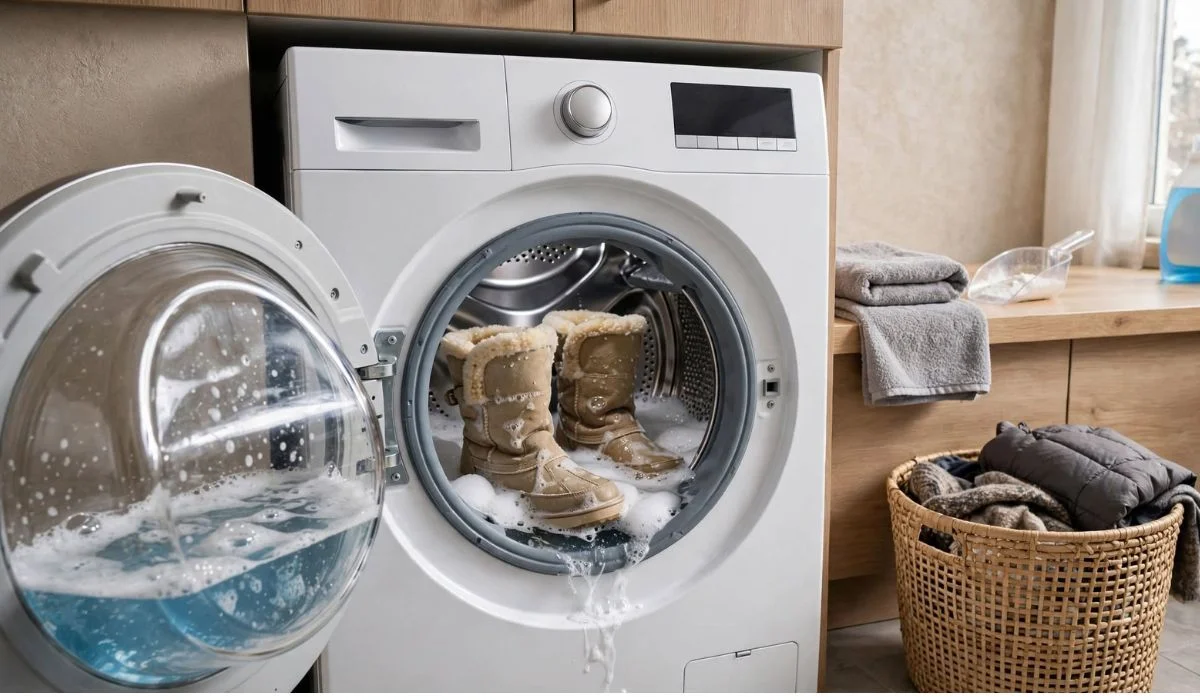
Once you have confirmed that your snow boots are machine washable, use the gentlest settings available.
Step 1: Place the Boots in a Laundry Bag
Put the boots inside a large mesh laundry bag or pillowcase. This can help prevent them from repeatedly striking the washing machine drum.
If using a pillowcase, secure the opening so the boots do not come out during the cycle.
Step 2: Add a Small Amount of Mild Detergent
Use a modest amount of mild liquid laundry detergent. Too much detergent can leave residue inside or outside the boots.
Avoid strong stain removers, chlorine bleach, and fabric softener unless specifically approved for the boot material.
Step 3: Select Cold Water
Cold water is generally a safer choice for washable snow boots because high temperatures may affect adhesives, synthetic materials, coatings, or insulation.
Step 4: Choose the Gentle Cycle
Select a gentle, delicate, or similar low-agitation cycle. Avoid heavy-duty cycles because strong agitation can place unnecessary stress on the boots.
Step 5: Wash the Boots With Similar Items
If appropriate, adding a few old towels can help cushion the boots and reduce banging inside the machine. Do not overload the washer.
The boots should have enough space to move without being crushed among a large load of laundry.
Step 6: Skip the High Heat
If your machine offers different spin settings, use a gentle or lower-speed option when possible. Excessive mechanical force can distort some snow boots.
What Temperature Should You Use to Wash Snow Boots?
For machine-washable snow boots, cold water is generally the safest starting point unless the manufacturer specifies another temperature.
Why Avoid Hot Water?
Hot water can potentially affect adhesives, synthetic materials, coatings, insulation, and the boot’s shape. It may also contribute to color changes in certain materials.
Always prioritize the specific care instructions for your boots.
Can You Use Regular Laundry Detergent?
A mild laundry detergent can be suitable for some machine-washable textile snow boots.
Use Detergent Sparingly
You do not need a large amount of detergent to clean a pair of boots. Excess detergent can be difficult to rinse completely and may leave a residue.
For specialty materials, use a cleaner recommended by the manufacturer rather than assuming standard laundry detergent is appropriate.
Should You Use Fabric Softener on Snow Boots?

It is generally better to skip fabric softener unless the manufacturer specifically recommends it.
Why Avoid Fabric Softener?
Fabric softeners are formulated for textiles rather than footwear and may leave residues or affect certain finishes and performance materials.
Snow boots often rely on specialized outer fabrics, coatings, or insulation, so keeping the cleaning routine simple is usually preferable.
How to Dry Snow Boots After Washing
Drying is arguably just as important as washing.
Even boots that tolerate machine washing can be damaged by improper drying.
Air-Dry the Boots Naturally
Remove the boots from the washing machine as soon as the cycle ends. Open them as much as possible and place them in a well-ventilated area at room temperature.
Stuffing them loosely with clean paper can help absorb moisture and maintain their shape.
Replace damp paper periodically until the boots are dry.
Can You Put Snow Boots in the Dryer?
Do not automatically put snow boots in a clothes dryer. Many snow boots should be air-dried because high heat can damage adhesives, insulation, waterproof coatings, synthetic materials, or rubber components.
Check the Manufacturer’s Instructions
If the care label specifically permits tumble drying, follow its temperature and cycle instructions. Otherwise, air drying is the safer choice.
Can You Dry Snow Boots Near a Heater?

It is tempting to place wet boots beside a radiator after washing, especially during winter. However, direct heat can cause problems.
Avoid High Direct Heat
Keep snow boots away from:
- Radiators
- Wood stoves
- Fireplaces
- Heat guns
- High-temperature vents
- Direct heating elements
Slow, natural drying helps minimize the risk of warping, cracking, shrinking, or adhesive failure.
Read Next: How To Care For Leather Sole
How Long Do Snow Boots Take to Dry?
Drying time varies according to the boot’s materials, insulation, thickness, and indoor humidity.
Help Them Dry More Efficiently
You can improve airflow by:
- Removing insoles
- Opening the boots
- Removing laces
- Using clean absorbent paper
- Placing them in a ventilated room
- Turning them periodically
Do not rush the process with excessive heat.
How to Remove Salt Stains From Snow Boots
Winter road salt can leave white marks on snow boots even after the mud has been removed.
Clean Salt Residue Promptly
For washable fabric boots, follow the manufacturer’s recommended cleaning method. A damp cloth may be enough for fresh surface residue.
Leather and suede require different care, so do not assume that a washing-machine method is suitable for those materials.
What If Your Snow Boots Cannot Go in the Washing Machine?
You can still clean them effectively by hand.
Hand-Washing Method
Start by removing loose dirt with a soft brush. Mix a small amount of mild detergent with water if the manufacturer permits it. Use a cloth or soft brush to clean the exterior without fully soaking the boots.
Wipe away detergent residue with a clean damp cloth and allow the boots to air-dry completely.
How to Clean Snow Boot Liners
Boot liners can absorb sweat and develop odors during regular winter use.
Removable Liners
If the liners are removable, check their care instructions separately. Some can be washed gently, while others should only be spot cleaned.
Make sure liners are completely dry before putting them back inside the boots. Trapped moisture can encourage unpleasant odors and microbial growth.
How to Keep Snow Boots Clean Longer
A little maintenance between deep cleanings can reduce the need for frequent washing.
Simple Winter Boot Habits
After wearing your snow boots:
- Brush away dried mud.
- Wipe off visible salt.
- Let moisture evaporate naturally.
- Remove wet liners when possible.
- Store boots in a dry location.
- Avoid leaving muddy boots in a closed bag.
Cleaning small amounts of dirt regularly is often easier on footwear than repeatedly putting heavily soiled boots through a washing machine.
Common Mistakes When Machine Washing Snow Boots
A washing machine can make cleaning convenient, but incorrect settings can cause unnecessary damage.
Avoid These Mistakes
- Washing boots without checking the care label
- Using hot water
- Selecting a heavy-duty cycle
- Using excessive detergent
- Adding bleach without approval
- Using fabric softener unnecessarily
- Overloading the washing machine
- Putting unsuitable leather or suede boots in the washer
- Using high heat to dry the boots
- Wearing the boots before they are completely dry
When Should You Replace Dirty Snow Boots Instead of Washing Them?
Cleaning can restore appearance, but washing cannot fix structural problems.
Look for Signs of Serious Damage
Consider professional repair or replacement if the boots have:
- Major sole separation
- Large cracks
- Torn waterproof membranes
- Severely damaged insulation
- Broken structural components
- Persistent water leakage
- Significant deterioration of the outer material
A clean boot is not necessarily a functional boot, so inspect its condition after washing.
FAQs About Washing Snow Boots in a Washing Machine
Can all snow boots go in the washing machine?
No. Some snow boots are machine washable, while others require hand cleaning. Always check the care label or manufacturer’s instructions before using a washing machine.
What washing machine setting is best for snow boots?
If machine washing is approved, a gentle or delicate cycle with cold water is generally the safest choice.
Can I wash snow boots with regular laundry?
It is better to avoid mixing boots with delicate clothing. If you machine wash them, using a few old towels can help cushion the boots and reduce impact inside the drum.
Can you put snow boots in the dryer?
Many snow boots should not be tumble dried. Air drying at room temperature is generally safer unless the manufacturer specifically permits dryer use.
Can I use detergent to wash snow boots?
For machine-washable textile boots, a small amount of mild detergent may be appropriate. Specialty materials may require a specific cleaner.
How do you wash white snow boots in a washing machine?
If the manufacturer says the boots are machine washable, use cold water, a gentle cycle, and mild detergent. Avoid bleach unless the care instructions specifically allow it.
How do I wash snow boots without ruining them?
Check the material and care label first. Use cold water, gentle agitation, limited detergent, and natural air drying when machine washing is permitted.
Can I wash leather snow boots in a washing machine?
Leather snow boots generally should not be placed in a washing machine unless the manufacturer specifically says they are machine washable. Leather often requires specialized cleaning and conditioning.
Can I wash suede snow boots in the washer?
Suede usually requires specialized care and should not be machine washed unless the manufacturer explicitly approves it.
How do I get the smell out of snow boots?
Clean the boots or removable liners according to their care instructions, allow everything to dry completely, and improve ventilation between wears. Persistent odors may require specialized footwear cleaning.
Why do snow boots smell after washing?
They may smell if moisture remains trapped inside the insulation or liner. Incomplete drying can contribute to odor and microbial growth.
How often should snow boots be washed?
Wash them when they become significantly dirty or develop noticeable salt, mud, or odor buildup. Regularly brushing and wiping them can reduce the need for frequent deep cleaning.