How To Disinfect Inside Of Boots | A Complete Guide to Removing Bacteria
Boots can trap sweat, moisture, dead skin cells, and bacteria inside a warm, enclosed environment. Over time, this can lead to unpleasant odors and make the inside of your footwear feel less fresh. Knowing how to disinfect the inside of boots can help keep them cleaner, fresher, and more comfortable between wears.
The best method depends on the boot material and whether the insoles or liners can be removed. Some boots can tolerate a mild disinfecting solution, while leather, suede, and specialty materials require more cautious treatment. The goal is to reduce odor-causing microorganisms without soaking the boot or damaging its lining.
Why Should You Disinfect the Inside of Boots?
The inside of a boot can accumulate moisture and organic material during normal use. Simply spraying perfume or air freshener may temporarily cover an odor without addressing the underlying cause.
What Can Build Up Inside Boots?
Regularly worn boots may contain:
- Sweat and moisture
- Skin cells
- Dirt
- Odor-causing bacteria
- Fungi and other microorganisms
- Residue from socks
- Moisture trapped in insulation or padding
Keeping the interior clean and dry can help reduce unpleasant smells and maintain a more hygienic footwear environment.
Can You Disinfect Boots Without Washing Them?

Yes. In many cases, you do not need to fully wash the boots. A careful cleaning followed by an appropriate disinfecting treatment can be enough.
Why Avoid Soaking the Boots?
Excess water can damage some boot materials, weaken adhesives, affect insulation, and make drying difficult. Leather and suede can also react poorly to excessive moisture.
A light, controlled application is generally preferable to saturating the interior.
Remove the Insoles First
If your boots have removable insoles, take them out before disinfecting the interior.
Why Remove Insoles?
Insoles often absorb a large amount of sweat and moisture. Cleaning them separately allows you to reach the bottom of the boot and address an important source of odor.
Check the insole’s care instructions before washing or disinfecting it.
Clean the Inside Before Disinfecting
Disinfecting works best when the interior is reasonably clean. Dirt and organic residue can interfere with the effectiveness of some disinfecting products.
Start With Dry Debris
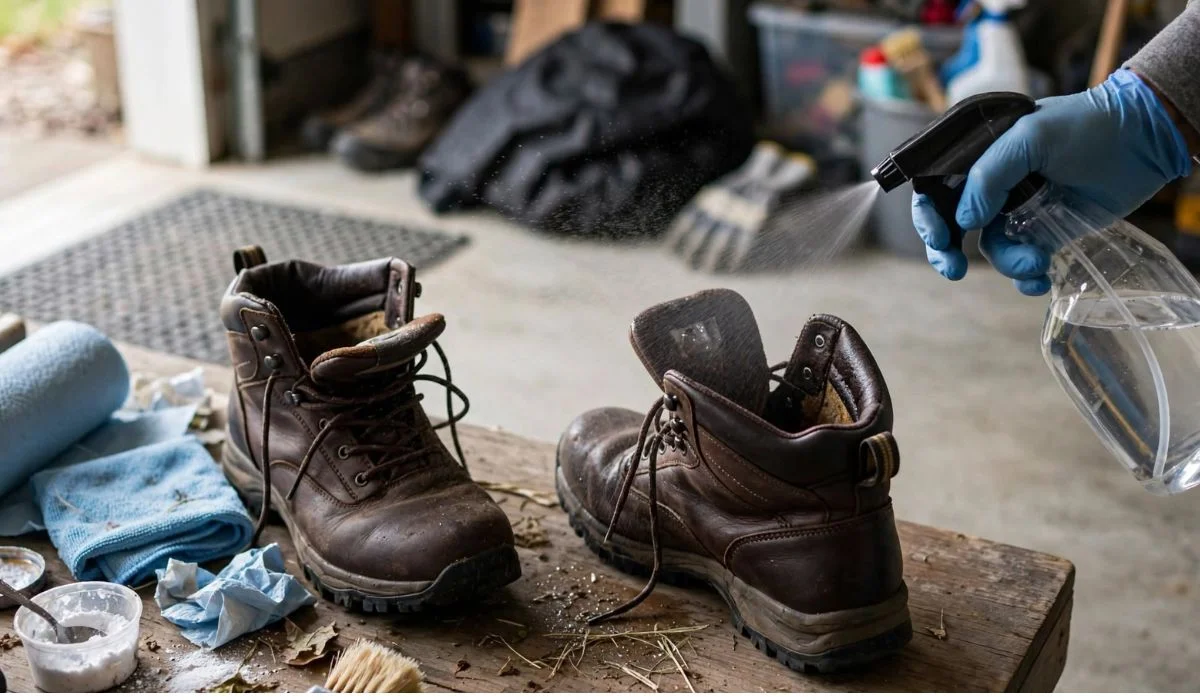
Shake out loose dirt and debris. Use a soft brush or cloth to remove visible residue from the lining without aggressively rubbing it.
If the manufacturer permits interior cleaning with a damp cloth, wipe the lining gently and allow it to dry before applying a disinfectant.
How to Disinfect the Inside of Boots:

For many washable or synthetic-lined boots, a footwear-safe disinfectant can be used according to its label instructions.
Step-by-Step Method
- Remove the insoles and laces if appropriate.
- Brush or wipe away loose dirt.
- Check the boot manufacturer’s care instructions.
- Choose a disinfectant labeled for footwear or the specific interior material.
- Test the product on a small, inconspicuous area.
- Apply a light, even amount according to the product directions.
- Avoid completely soaking the lining.
- Allow the interior to remain wet for the disinfectant’s specified contact time when required.
- Let the boots dry completely in a well-ventilated area.
- Reinstall completely dry insoles before wearing the boots.
Always follow the disinfectant manufacturer’s instructions for application and contact time rather than assuming that more product provides better results.
What Disinfectant Is Safe for Boots?
There is no universal disinfectant that is safe for every boot. The lining, upper material, adhesives, dyes, and waterproof membranes can all react differently to cleaning chemicals.
Look for Footwear-Compatible Products
A product specifically labeled for footwear or the relevant material is generally easier to evaluate than a household chemical being used for an unintended purpose.
Avoid mixing cleaning products. Combining disinfectants or cleaners can produce harmful chemical reactions.
Can You Use Rubbing Alcohol Inside Boots?
Rubbing alcohol is sometimes used for odor control, but it is not automatically appropriate for every boot interior.
Alcohol can affect dyes, finishes, synthetic materials, and adhesives. It can also dry certain materials.
Test Before Using Alcohol
If the boot manufacturer permits alcohol-based cleaning, test a small hidden area first and allow it to dry completely. Never assume that a method suitable for one pair of boots is safe for another.
Read Next: How To Wash Snow Boots
Can You Use Hydrogen Peroxide to Disinfect Boots?
Hydrogen peroxide has disinfecting properties, but household solutions can affect colors and materials.
Use Caution With Colored Linings
Hydrogen peroxide may cause discoloration on some fabrics or dyes. If you are considering it, check the manufacturer’s care instructions and the product’s intended use first.
A footwear-specific disinfectant may be a more predictable option.
Can You Use Vinegar to Disinfect the Inside of Boots?
Vinegar is commonly suggested as a home remedy for footwear odors, but it should not automatically be treated as a complete disinfecting solution.
Vinegar Is Better Considered a Cleaning Aid
Its acidity may help with some odors, but household vinegar should not be relied upon as a universal substitute for a registered disinfectant when actual disinfection is required.
It can also affect certain materials and finishes, so test cautiously and follow the boot manufacturer’s recommendations.
How to Disinfect Leather Boot Interiors
Leather boots require additional care because excessive moisture and harsh chemicals can damage leather.
Keep the Treatment Focused on the Lining
Avoid saturating leather components. If the interior contains leather, use a cleaner or disinfectant specifically approved for leather or the particular boot construction.
For valuable or specialty leather boots, professional footwear cleaning may be the safest option.
How to Disinfect Suede Boot Interiors
Suede requires even more caution because moisture and chemicals can alter its texture or color.
Avoid Generic Household Chemicals
Do not automatically spray household disinfectants inside suede boots. Check the manufacturer’s care instructions and use a product specifically compatible with the material if disinfection is appropriate.
How to Disinfect Work Boots
Work boots can accumulate substantial sweat, dirt, and moisture, especially when worn for long shifts.
Create a Regular Cleaning Routine
After work, remove the insoles if possible and allow the boots to air out. Brush away dirt and use an appropriate interior cleaner when necessary.
For boots exposed to particularly dirty environments, follow workplace or manufacturer sanitation recommendations rather than relying solely on home remedies.
How to Disinfect Smelly Boots
Odor is often caused by moisture combined with microorganisms and accumulated residue. Disinfecting alone may not solve the problem if the boots remain damp.
Dryness Is a Major Part of Odor Control
After cleaning or disinfecting, allow the boots to dry completely. Improving ventilation between wears can make a major difference.
You can also:
- Change socks regularly
- Rotate between pairs
- Remove insoles after wearing
- Allow boots to air out
- Keep feet clean and dry
- Clean insoles regularly
- Avoid storing damp boots in closed spaces
How to Dry the Inside of Boots After Disinfecting
Proper drying is essential.
Use Airflow Instead of High Heat
Place boots in a well-ventilated area at room temperature. Open the shafts as much as possible and remove the insoles.
Clean paper can be placed loosely inside to absorb moisture, provided it does not transfer ink or color.
Avoid placing boots directly on radiators, heaters, or other high-temperature surfaces.
Can You Use a Hair Dryer to Dry Boots?

High heat is generally not recommended. It can affect leather, synthetic materials, adhesives, waterproof membranes, and boot shape.
If Faster Drying Is Necessary
Prioritize airflow rather than intense heat. A fan positioned nearby can improve air circulation without exposing the boots to excessive temperatures.
Can Freezing Boots Disinfect Them?
Freezing is sometimes promoted online as a way to kill bacteria, but it should not be considered a reliable replacement for proper cleaning and disinfection.
Why Freezing Is Not a Complete Solution
Low temperatures may slow microbial activity, but freezing does not reliably eliminate every microorganism. It also does not remove sweat, dirt, skin cells, or other organic residue.
Proper cleaning, drying, and an appropriate disinfectant are more dependable approaches.
How to Disinfect Boot Insoles
Insoles should be treated separately whenever possible.
Follow the Insole Care Label
Some removable insoles can be washed, while others should only be wiped or treated with a footwear-safe spray.
After cleaning or disinfecting, allow the insoles to dry completely before returning them to the boots.
If an insole remains persistently odorous despite cleaning, replacing it may be more practical.
How Often Should You Disinfect the Inside of Boots?
The ideal frequency depends on how often the boots are worn and how much moisture they encounter.
Consider More Frequent Cleaning When
You may need to clean or disinfect more often if:
- You wear the boots every day.
- Your feet sweat heavily.
- The boots become wet frequently.
- You wear them for long work shifts.
- They develop persistent odors.
- The insoles become visibly dirty.
There is usually no need to aggressively disinfect boots that are rarely worn and remain clean and dry.
How to Prevent Bacteria and Odor From Returning
Disinfection is only one part of footwear hygiene. Prevention can reduce the need for repeated chemical treatment.
Build Better Boot Habits
Let boots dry between wears whenever possible. Rotate pairs instead of wearing the same boots continuously, and use clean, moisture-managing socks.
If the boots become wet, dry them promptly rather than leaving them in a closed bag or dark closet.
When Should You Replace Boot Insoles?
Sometimes the interior odor persists because the insole has absorbed years of sweat and moisture.
Signs an Insole May Need Replacement
Consider replacing it when it has:
- Persistent odor after cleaning
- Significant staining
- Compression or loss of cushioning
- Visible deterioration
- Cracking or peeling
- Structural damage
A new insole can sometimes make an old pair of boots feel considerably fresher.
Common Mistakes When Disinfecting Boots
Using too much cleaning product can cause more problems than it solves.
Avoid These Mistakes
- Soaking the entire boot
- Using an untested household chemical
- Mixing cleaning products
- Ignoring the manufacturer’s care instructions
- Applying disinfectant to incompatible leather or suede
- Leaving the boots damp after treatment
- Using excessive heat for drying
- Spraying perfume instead of cleaning the interior
- Returning damp insoles to the boots
- Wearing boots continuously without allowing them to air out
FAQs About Disinfecting the Inside of Boots
What is the best way to disinfect the inside of boots?
Clean visible dirt first, then use a disinfectant specifically suitable for the boot’s interior material. Apply it according to the label instructions, observe the required contact time, and allow the boots to dry completely.
Can I spray Lysol inside my boots?
Do not assume that a household disinfectant is suitable for footwear. Check the product label and boot manufacturer’s instructions first, particularly if the boots contain leather, suede, specialty coatings, or delicate linings.
How do I disinfect boots without damaging them?
Identify the boot material, choose a compatible product, test it in a hidden area, and avoid soaking the interior. Gentle cleaning and thorough air drying are important.
Does vinegar kill bacteria inside boots?
Vinegar may help with some odors and cleaning tasks, but it should not automatically be considered a complete footwear disinfectant. Use a product intended for disinfection when actual disinfection is needed.
Can rubbing alcohol remove boot odor?
Alcohol may help reduce some microorganisms and odors, but it can damage or discolor certain materials. Use it only when compatible with the boot and after checking the manufacturer’s recommendations.
How do you disinfect leather boots inside?
Use a product specifically compatible with the interior material and avoid saturating the leather. For valuable leather boots, professional cleaning may be preferable.
How do I get rid of bacteria in smelly boots?
Clean the interior, treat it with an appropriate footwear-safe disinfectant when suitable, and allow the boots to dry completely. Keeping them dry between wears is essential for controlling recurring odor.
Can I put baking soda inside boots?
Baking soda is commonly used to absorb odors, but it is not a substitute for proper disinfection. It can be useful as part of general odor management when used appropriately.
How long should disinfectant stay inside boots?
Follow the disinfectant’s label instructions. Some products require a specific wet contact time to work effectively, while others have different application requirements.
Should I disinfect my boot insoles?
Yes, when the manufacturer’s care instructions allow it. Insoles can accumulate sweat and odor, so cleaning or replacing them can improve the overall freshness of the boots.
Can I use bleach inside boots?
Avoid bleach unless the boot and product manufacturer specifically indicates that it is safe. Bleach can discolor materials and damage some footwear components.
How often should I disinfect my work boots?
There is no universal schedule. Clean and disinfect them as needed based on sweat, moisture, odor, and the conditions in which they are worn, while following the manufacturer’s care instructions.
Final Thoughts
Knowing how to disinfect the inside of boots does not require soaking them in strong chemicals. Start by removing dirt and removable insoles, choose a disinfectant compatible with the boot’s interior, apply it according to the product directions, and allow everything to dry completely.
For leather, suede, exotic materials, or boots with specialized waterproof linings, extra caution is important. When the material cannot tolerate disinfectants or moisture, cleaning and ventilation may be safer options.
Most importantly, keep boots dry between wears, clean the insoles regularly, and avoid storing damp footwear in enclosed spaces. Good everyday habits can prevent odors from returning and help your boots stay fresher for longer.