
What Shoes Are good For Posture | Comfort, and Better Walking Support
The shoes you wear can influence how your feet interact with the ground, which may affect your alignment, balance, and the way you walk. While shoes cannot correct every posture problem, supportive footwear may help you maintain a more comfortable and stable position throughout the day. The best shoes for posture generally provide a secure fit, adequate cushioning, appropriate support, and a stable base without forcing the foot into an unnatural position.
How Can Shoes Affect Posture?

Your feet provide the foundation for your body when you’re standing and walking. When footwear changes how your feet contact the ground, it can also influence movement higher up the body.
Poorly fitting or unstable shoes may encourage compensations in the ankles, knees, hips, and back. This doesn’t mean that a particular shoe automatically causes poor posture, but footwear can be one factor affecting overall movement.
The Foot-to-Posture Connection
When you stand, your body continuously makes small adjustments to maintain balance. Comfortable footwear can provide a stable platform for these adjustments.
Shoes that are too narrow, excessively flexible, worn out, or unstable may make it harder to maintain comfortable alignment.
Posture Is More Than Standing Straight
Good posture isn’t simply about pulling your shoulders backward.
Healthy posture involves maintaining a comfortable alignment while standing, walking, sitting, bending, and moving. Footwear should support natural movement rather than force your body into a rigid position.
What Shoes Are Good for Posture?

The best shoes for posture are usually those that fit properly and provide a stable, comfortable foundation.
Look for these characteristics:
- A comfortable and secure fit
- Adequate cushioning
- A stable sole
- Sufficient arch support for your individual foot
- A roomy toe box
- A moderate heel height
- Good traction
- Appropriate flexibility
- Proper heel stability
No single shoe works perfectly for everyone. Foot shape, activity, walking pattern, and individual needs all matter.
Walking Shoes Can Be a Strong Choice:
Well-designed walking shoes are often a practical option for people who spend a lot of time on their feet.
They typically combine cushioning, stability, flexibility, and traction without requiring a high heel.
What to Look for in Walking Shoes
A good walking shoe should hold your heel securely without squeezing it. Your toes should have enough room to move naturally.
The sole should also provide enough stability for your normal walking environment.
Running Shoes Can Support Comfortable Movement
Running shoes aren’t only for running. Some models can be comfortable for everyday walking because they offer cushioning and supportive construction.
However, running shoes vary significantly.
Don’t Choose a Running Shoe Only for Maximum Cushioning
More cushioning isn’t automatically better for posture.
The shoe should feel stable and comfortable under your feet. Excessively soft or unstable footwear may not be appropriate for everyone.
Consider the entire design rather than focusing only on foam thickness.
Low-Heeled Shoes May Help Maintain a Natural Position
Very high heels change the position of the foot and can shift body mechanics while standing and walking.
For everyday use, shoes with a low or moderate heel are generally easier to walk in naturally than very high heels.
Why High Heels Can Change Alignment
High heels place the foot in a more pointed position and alter the distribution of body weight. They can also change how the ankles, knees, hips, and lower back are positioned.
Occasional use isn’t necessarily a problem for everyone, but wearing very high heels for extended periods may be uncomfortable and can affect normal movement.
Supportive Sneakers Are Useful for Everyday Posture:
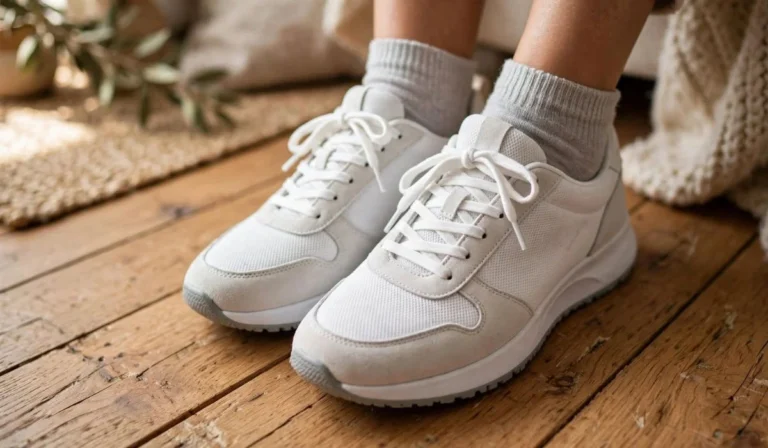
A supportive sneaker can be one of the easiest footwear choices for daily activities.
Look for a model that combines:
- A stable heel
- Comfortable cushioning
- Secure lacing
- A suitable sole
- Adequate toe room
- Good traction
Sneakers are particularly useful when you’re walking, shopping, commuting, or spending long periods standing.
Shoes With Good Arch Support Can Be Helpful
Arch support is often discussed when choosing footwear for posture, but there isn’t one ideal arch shape for everyone.
Some people feel more comfortable in shoes with structured arch support, while others prefer less intrusive designs.
Your Foot Shape Matters
A shoe should support your foot without creating painful pressure underneath the arch.
If an arch-support feature feels uncomfortable, causes rubbing, or creates pressure, it may not be the right design for you.
A Wide Toe Box Can Improve Comfort
Your toes need adequate space to spread and move inside the shoe.
Shoes that squeeze the front of the foot can create discomfort and may affect how you stand or walk.
What Should Your Toes Feel Like?
Your toes shouldn’t be pressed together or forced into an unnatural position.
When trying on shoes, make sure there is enough space around the widest part of your foot and sufficient length in front of your longest toe.
Stable Heel Counters Can Improve Foot Stability
The heel area of a shoe should hold your foot securely.
A stable heel can help prevent excessive movement inside the shoe while walking.
Check the Heel Fit
Your heel should remain relatively secure when you walk.
Some slight movement can be normal, especially with certain shoe designs, but excessive slipping can make the shoe feel unstable and uncomfortable.
Avoid Shoes That Are Too Worn Out
Even a well-designed shoe may stop providing appropriate support after substantial wear.
Look at the outsole and midsole for signs of deterioration.
Signs Your Shoes May Need Replacing
Consider replacing footwear when you notice:
- Uneven outsole wear
- Flattened cushioning
- Cracked or damaged soles
- Persistent discomfort
- Loss of stability
- Significant heel breakdown
- Changes in how the shoe feels while walking
The exact lifespan depends on the shoe, materials, activity level, body weight, and frequency of use.
What Shoes May Be Less Helpful for Posture?

Some footwear designs can make comfortable alignment more difficult, particularly when worn for long periods.
Examples may include:
- Very high heels
- Extremely narrow shoes
- Shoes that don’t fit properly
- Unstable footwear
- Worn-out shoes
- Shoes with insufficient traction
- Footwear that causes pain
This doesn’t mean you can never wear these styles. The key is understanding how they affect your comfort and movement.
Are Flat Shoes Always Better for Posture?
Not necessarily.
A completely flat shoe isn’t automatically better than a supportive shoe. Some people are comfortable in minimal footwear, while others prefer more cushioning or structure.
Comfort Should Guide the Choice
If a flat shoe causes foot fatigue, pain, or instability, it may not be the best everyday option for you.
Likewise, adding excessive support isn’t necessarily beneficial if it makes the shoe uncomfortable.
What About Minimalist Shoes?
Minimalist shoes typically have less cushioning and structural support and allow greater interaction between the foot and the ground.
Some people enjoy them, but they aren’t automatically the best shoes for posture.
Transition Gradually
If you’re accustomed to highly cushioned or structured footwear, suddenly switching to minimalist shoes may place different demands on your feet and lower legs.
A gradual transition is generally more sensible than immediately wearing them for long periods.
Can Orthopedic Shoes Improve Posture?
Orthopedic or supportive footwear may be useful for people with specific foot or movement needs, but the term “orthopedic” alone doesn’t guarantee that a shoe is right for you.
If you have persistent foot, knee, hip, or back problems, a qualified healthcare professional can help determine whether specialized footwear is appropriate.
Custom Orthotics Are Not for Everyone
Orthotic inserts can be helpful in some situations, but they aren’t universally necessary.
An insert should fit comfortably inside the shoe and address an actual need rather than being used simply because it is marketed as a posture solution.
How Should Shoes Fit for Better Posture?

Fit is arguably one of the most important factors.
A supportive shoe that doesn’t fit properly can still be uncomfortable and interfere with natural movement.
Use These Fit Checks
When trying on shoes:
- Try them on while standing.
- Wear the socks you normally use.
- Check both feet because they may differ slightly in size.
- Make sure your toes aren’t cramped.
- Walk around before buying.
- Check for heel slipping.
- Look for pressure points.
- Make sure the shoe feels stable.
It’s usually better to judge the shoe by how it feels on your feet rather than relying solely on its appearance or marketing claims.
When Is the Best Time to Try on Shoes?
Feet can swell somewhat during the day, particularly after you’ve been standing or walking.
Trying shoes later in the day can help you assess how they feel when your feet are closer to their larger everyday size.
Can Good Shoes Fix Bad Posture?
Shoes can support comfortable movement, but they generally cannot fix every posture problem.
Posture is influenced by many factors, including muscle strength, mobility, movement habits, body structure, footwear, work setup, and physical activity.
Think of Shoes as One Piece of the Puzzle
Instead of searching for a “posture-correcting” shoe, focus on footwear that allows comfortable, stable movement.
Regular physical activity and appropriate strengthening or mobility work may also play an important role in overall movement quality.
How to Choose Shoes for Standing All Day
If your job requires prolonged standing, comfort and stability become particularly important.
Look for shoes with:
- Adequate cushioning
- Stable construction
- Comfortable arch support
- A roomy toe box
- Secure heel fit
- Breathable materials
- Reliable traction
Consider the Surface You Stand On
A shoe that works well on a soft indoor surface may feel different on concrete or other hard flooring.
Choose footwear according to the environment where you’ll spend most of your time.
How to Choose Shoes for Walking
For everyday walking, prioritize a secure fit and comfortable movement.
Your shoe should allow your foot to move naturally without excessive sliding inside the shoe.
Don’t Ignore Comfort During the First Few Minutes
Walk around the store or your home before committing to a new pair.
If the shoe immediately causes pinching, rubbing, numbness, or significant pressure, another design may be a better choice.
How to Improve Posture Beyond Your Shoes
Shoes are only one part of maintaining comfortable body alignment.
You can also pay attention to:
- Regular movement
- Core and lower-body strength
- Hip mobility
- Ankle mobility
- Sitting habits
- Workstation setup
- Walking technique
- Overall physical activity
Avoid staying in one position for excessively long periods whenever possible.
A Simple Checklist for Posture-Friendly Shoes
Before buying a pair, ask yourself:
Does it fit? Your foot should feel secure without being squeezed.
Is it stable? You shouldn’t feel like you’re constantly fighting the shoe to maintain balance.
Is there enough toe room? Your toes should not be cramped.
Is the heel appropriate? Lower heels are generally more practical for extended everyday wear.
Does it feel comfortable? Pain is not a sign that a shoe is “training” your posture correctly.
Is it suitable for your activity? Walking shoes, running shoes, work shoes, and casual footwear can have different designs for different purposes.
Final Thoughts
So, what shoes are good for posture? In most cases, the answer is not one particular brand or style. The better choice is footwear that fits your feet properly, provides appropriate stability and cushioning, allows natural toe movement, and feels comfortable during your intended activity.
Supportive walking shoes, well-fitting sneakers, and low-heeled footwear can all be sensible options. At the same time, no shoe can guarantee perfect posture. If footwear causes pain or you have persistent problems with your feet, knees, hips, or back, professional evaluation is a better approach than relying on a “posture-correcting” shoe.
FAQs
What type of shoes are best for posture?
Well-fitting shoes with a stable base, appropriate cushioning, adequate toe room, and a secure heel are generally good choices. The ideal design depends on your feet and daily activities.
Are sneakers good for posture?
Yes. A supportive, properly fitting sneaker can be an excellent everyday option for walking and standing. Choose stability and comfort rather than simply selecting the most cushioned model.
Are flat shoes better for your posture?
Not automatically. Some people prefer flat shoes, while others are more comfortable with cushioning or moderate support. The best choice is the one that allows comfortable and stable movement.
Can wearing high heels affect posture?
High heels change foot position and body mechanics. Very high heels can shift weight forward and alter the position of the ankles, knees, hips, and lower back.
Should shoes have arch support?
Arch support can be helpful for some people, but there is no universal level of support that everyone needs. Choose footwear that supports your feet comfortably without creating pressure or pain.
Is walking barefoot better for posture?
Walking barefoot can allow the feet to interact directly with the ground, but it isn’t automatically better for everyone. Surface, activity, foot structure, and individual comfort all matter.
Can shoes correct bad posture?
Shoes may support comfortable alignment and movement, but they generally cannot correct every cause of poor posture. Exercise, strength, mobility, and movement habits can also be important.
How much toe room should shoes have?
Your toes should have enough space to move without being squeezed. There should also be adequate length in front of the longest toe so it isn’t pressing against the shoe.
Why do my feet hurt in supportive shoes?
“Supportive” doesn’t necessarily mean appropriate for every foot. The shape, width, arch design, cushioning, and overall fit may not suit you. Pain is a reason to reconsider the shoe rather than simply trying to tolerate it.
How often should I replace shoes for good support?
There is no universal replacement date. Replace shoes when the cushioning, tread, structure, or fit has noticeably deteriorated or when they become uncomfortable.